Sodium Chloride → 4-Bromo-2,5-di(propan-2-yl)benzene-1-sulfonyl chloride
Reaction equation

[Cl:1][S:2]([OH:5])(=O)=[O:3].[CH:6]([C:9]1[CH:14]=[CH:13][C:12]([CH:15]([CH3:17])[CH3:16])=[CH:11][C:10]=1[Br:18])([CH3:8])[CH3:7].[Cl-].[Na+]>C(Cl)(Cl)(Cl)Cl>[Br:18][C:10]1[C:9]([CH:6]([CH3:7])[CH3:8])=[CH:14][C:13]([S:2]([Cl:1])(=[O:5])=[O:3])=[C:12]([CH:15]([CH3:17])[CH3:16])[CH:11]=1Participants
5
Reactant 3

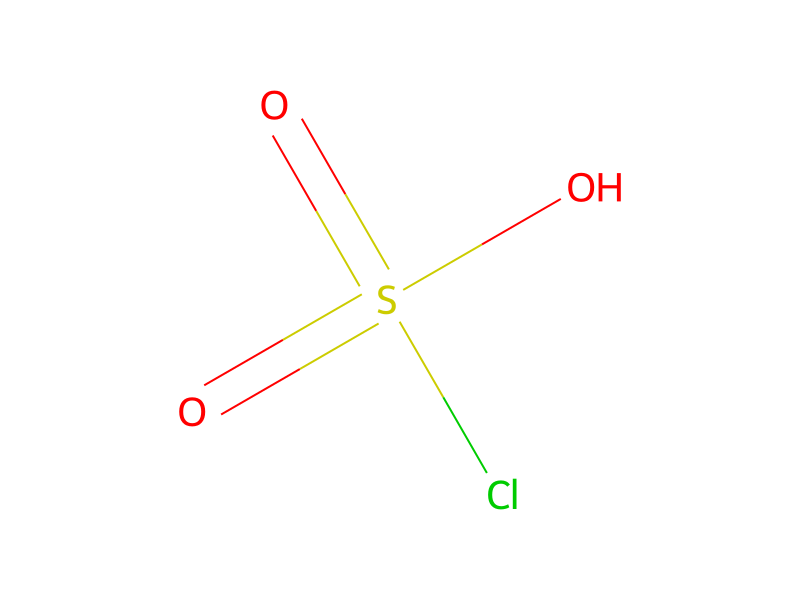

Product 1

Reagents, catalysts & solvents 1

Procedure
4-Bromo-2,5-diisopropylbenzene sulfonyl chloride was prepared as follows: Chlorosulfonic acid, 154 g, was added over 15 minutes to 80 g of 2,5-diisopropylbromobenzene in 200 ml of carbon tetrachloride. The reactants were stirred for 30 minutes longer and then poured onto a mixture of ice and saturated sodium chloride solution. The organic layer was washed with cold water and dried over magnesium sulfate. Removal of the solvent gave 105 g of crystalline product. Recrystallization from n-hexane gave pure 4-bromo-2,5-diisopropylbenzene sulfonyl chloride, which softened at 77°C and melted at 80.5°-83°C.
Workup
- washThe organic layer was washed with cold water
- dry with materialdried over magnesium sulfate
- customRemoval of the solvent
Sources & evidence
- ORD record
- ord-59b0a8c5459b4ababd4c1bfcd2b4f71c
- Source dataset
- uspto-grants-1976_03
- Patent number
- US03941826
Reaction notes
Loading…