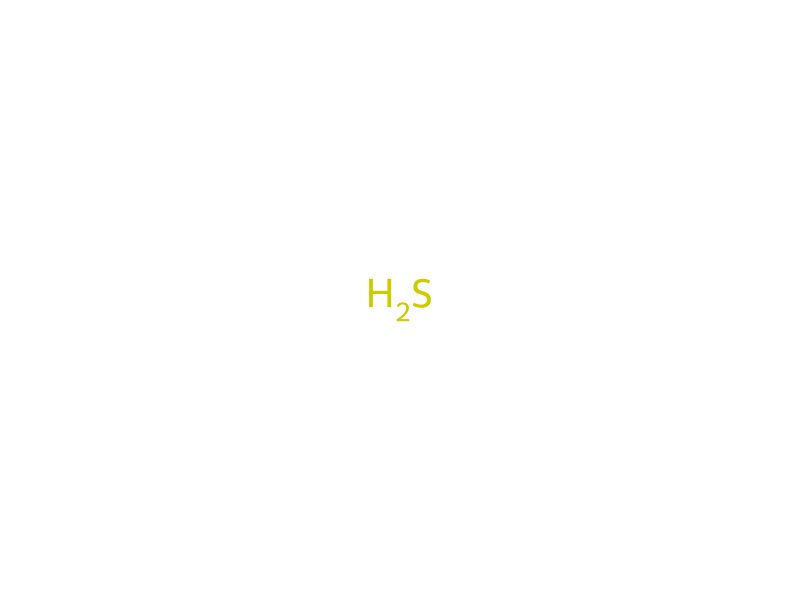
Hydrogen Sulfide → HCID 178477143, compound
Reaction equation

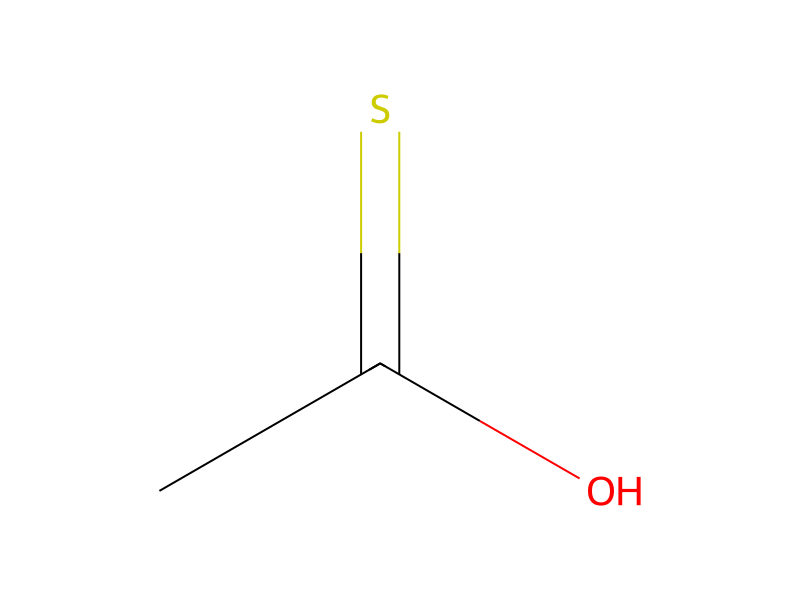
[C:1]([OH:4])(=[S:3])[CH3:2].[C:5]([O-:8])(=[S:7])[CH3:6].[Fe+2:9].[C:10]([O-:13])(=[S:12])[CH3:11].[Fe]=S.S>O>[C:1]([O-:4])(=[S:3])[CH3:2].[Fe+3:9].[C:5]([O-:8])(=[S:7])[CH3:6].[C:10]([O-:13])(=[S:12])[CH3:11]Participants
Reactant 4


Product 1

Reagents, catalysts & solvents 1

Procedure
In the reactions above, a major portion, up to about 99% of the iron oxides remain unreacted. When ferrous oxide is completely reacted with thioacetic acid, the reaction product is dark green iron (II) thioacetate, a compound that is stable at room temperature. Heating the solid or boiling with water causes rapid decomposition yielding a variety of products including iron sulfide and hydrogen sulfide. The corresponding reaction with ferric oxide is quite complex as shown above, yielding iron (III) thioacetate. Iron (III) thioacetate is not stable at room temperature and hydrolyzes slowly, eventually yielding iron acetate, iron sulfide and sulfur. For the sulfur containing thiolic acids, the electrode activator it is believed comprises a mixture of the iron thio-salt and iron sulfide.
Workup
- customis stable at room temperature
- temperatureHeating the solid
- customyielding a variety of products
Sources & evidence
- ORD record
- ord-31a336b09dc0464ebdbef80601443074
- Source dataset
- uspto-grants-1976_03
- Patent number
- US03947292
Reaction notes
Loading…