1,2-Dibromobenzene → 2'-Bromo-biphenyl-3-carbonitrile
Reaction equation

[C:1]([C:3]1[CH:4]=[C:5](B(O)O)[CH:6]=[CH:7][CH:8]=1)#[N:2].[Br:12][C:13]1[CH:18]=[CH:17][CH:16]=[CH:15][C:14]=1Br.C1(C)C=CC=CC=1.C(O)C>C(OCC)C.O.C1C=CC([P]([Pd]([P](C2C=CC=CC=2)(C2C=CC=CC=2)C2C=CC=CC=2)([P](C2C=CC=CC=2)(C2C=CC=CC=2)C2C=CC=CC=2)[P](C2C=CC=CC=2)(C2C=CC=CC=2)C2C=CC=CC=2)(C2C=CC=CC=2)C2C=CC=CC=2)=CC=1>[Br:12][C:13]1[CH:18]=[CH:17][CH:16]=[CH:15][C:14]=1[C:5]1[CH:6]=[CH:7][CH:8]=[C:3]([C:1]#[N:2])[CH:4]=1Participants
7

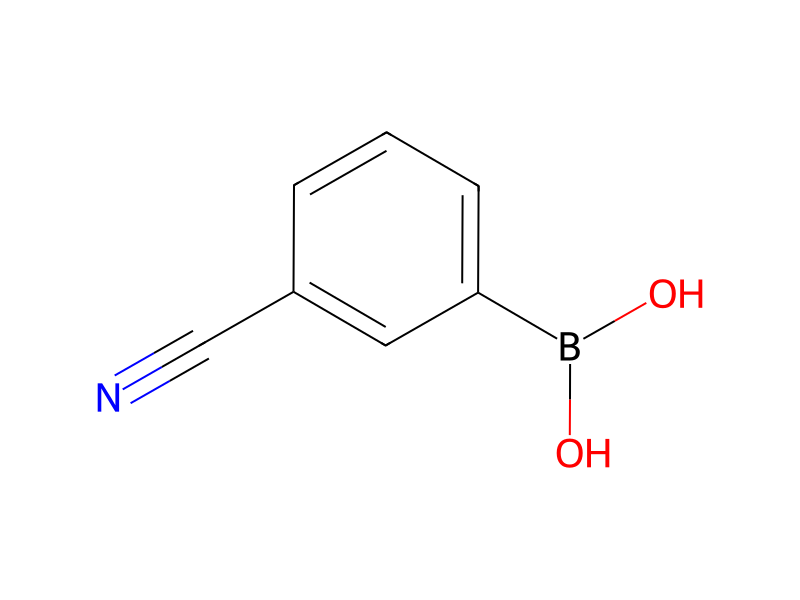





Conditions
- Temperature
- 90 °C
Procedure
A mixture of 3-cyanophenylboronic acid (735 mg, 5 mmol), 1,2-dibromobenzene (2.36 g, 10 mmol) potassium carbonate (6.9 g, 50 mmol) and tetrakis(triphenylphosphine)palladium(0) (580 mg, 0.5 mmol) in 1:1 toluene/ethanol (40 ml) was stirred and heated at 90° C. under nitrogen for 3 hours. After cooling the mixture was diluted with diethyl ether and water and the organic phase dried (MgSO4) and evaporated to dryness. The residue was purified by chromatography using Biotage with ethyl acetate/iso-hexane (1:19) to yield the title compound as a white solid (895 mg 69%).
Workup
- temperatureAfter cooling the mixture
- dry with materialthe organic phase dried (MgSO4)
- customevaporated to dryness
- customThe residue was purified by chromatography
Sources & evidence
- ORD record
- ord-61ef2a173c7c443d8121534960b66168
- Source dataset
- uspto-grants-2008_11
- Patent number
- US07446222B2
Reaction notes
Loading…