Diisopropylamine → HCID 18460833, compound
Reaction equation

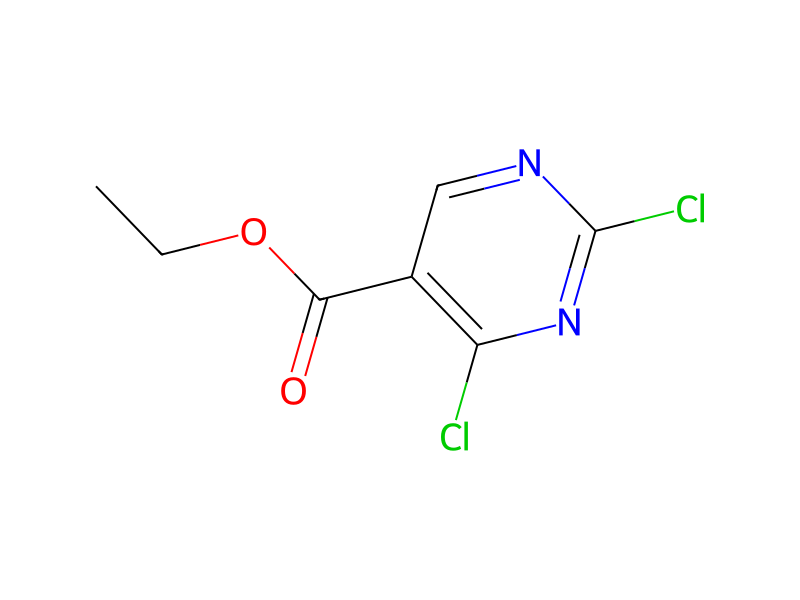
[CH2:1]([O:3][C:4]([C:6]1[C:7](Cl)=[N:8][C:9]([Cl:12])=[N:10][CH:11]=1)=[O:5])[CH3:2].[NH2:14][C:15]1[CH:20]=[CH:19][CH:18]=[C:17]([CH3:21])[CH:16]=1.C(NC(C)C)(C)C>C(#N)C>[CH2:1]([O:3][C:4]([C:6]1[C:7]([NH:14][C:15]2[CH:20]=[CH:19][CH:18]=[C:17]([CH3:21])[CH:16]=2)=[N:8][C:9]([Cl:12])=[N:10][CH:11]=1)=[O:5])[CH3:2]Participants
5
Reactant 3


Product 1

Reagents, catalysts & solvents 1

Procedure
2,4-Dichloropyrimidine-5-carboxylic ethyl ester and m-toluidine were allowed to undergo the reaction in acetonitrile in the presence of diisopropylamine to obtain 2-chloro-4-[(3-methylphenyl)amino]pyrimidine-5-carboxylic ethyl ester. Said ester compound was hydrolyzed in THF with 1 M sodium hydroxide aqueous solution, and the resulting carboxylic acid compound was allowed to react with oxalyl chloride in dichloromethane in the presence of a catalytic amount of DMF and then treated with a mixture of aqueous ammonia and ice to obtain 2-chloro-4-[(3-methylphenyl)amino]pyrimidine-5-carboxamide. F: 263.
Sources & evidence
- ORD record
- ord-23d4023a4a194efa88218d33b01d9ec9
- Source dataset
- uspto-grants-2008_11
- Patent number
- US07449456B2
Reaction notes
Loading…