Cyclohexanone → Methyl 3-cyclohexyl-1H-indole-6-carboxylate
Reaction equation

N1C2C(=CC=C(C(O)=O)C=2)C=[CH:2]1.C1(=O)CCCCC1.[C:20]1([C:26]2[C:34]3[C:29](=[CH:30][C:31]([C:35]([OH:37])=[O:36])=[CH:32][CH:33]=3)[NH:28][CH:27]=2)[CH2:25][CH2:24][CH2:23][CH2:22][CH:21]=1>>[CH:20]1([C:26]2[C:34]3[C:29](=[CH:30][C:31]([C:35]([O:37][CH3:2])=[O:36])=[CH:32][CH:33]=3)[NH:28][CH:27]=2)[CH2:25][CH2:24][CH2:23][CH2:22][CH2:21]1Participants

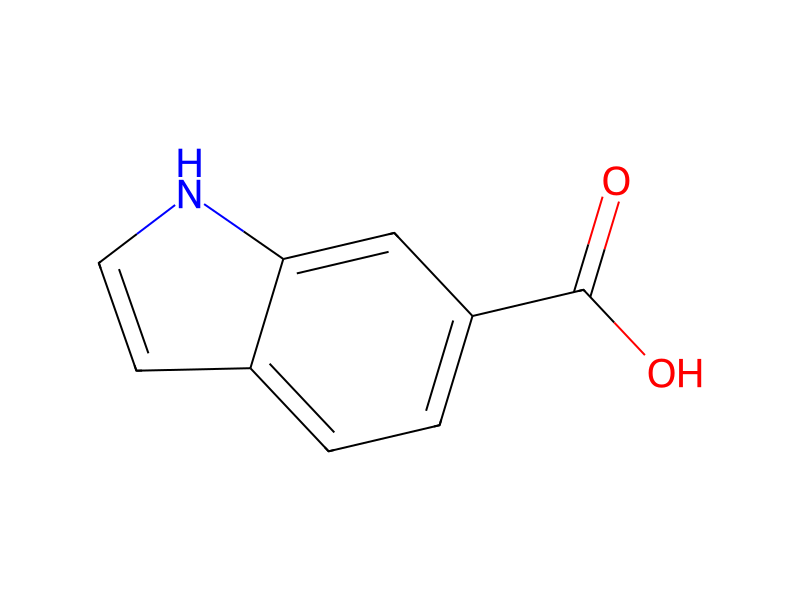


Procedure
Condensation of 1H-indole-6-carboxylic acid with cyclohexanone under basic conditions can generate 3-cyclohexenyl-1H-indole-6-carboxylic acid. This indole ester can be subjected to sequential reduction and esterification to provide methyl 3-cyclohexanyl-1H-indole-6-carboxylate. Treatment of the resultant indole ester with pryridinium tribromide in a mixture of THF and chloroform can generate methyl 2-bromo-3-cyclohexanyl-1H-indole-6-carboxylate. This intermediate can be coupled with a variety of reagents and compounds. For example, 2-formyl-phenyl boronic acids using appropriate palladium catalysts can generate the aromatic aldehyde intermediates shown. These aryl aldehydes are sometimes observed to exist in equilibrium with the related ring-closed hemiaminals, as shown below.
Sources & evidence
- ORD record
- ord-59092e68e0544861802f7b402570c3fe
- Source dataset
- uspto-grants-2008_11
- Patent number
- US07456167B2
Reaction notes
Loading…