Ammonia → 5-Bromoquinazolin-4(1H)-one
Reaction equation

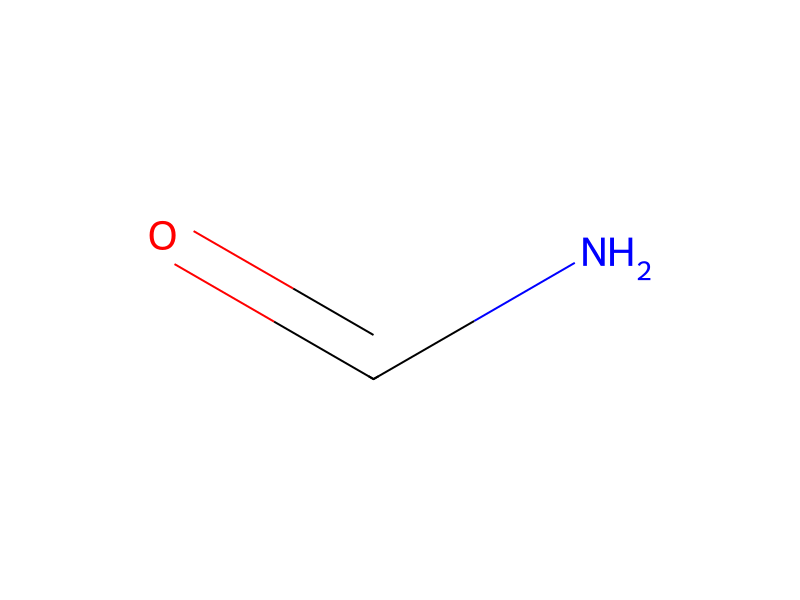
[NH3:1].[Br:2][C:3]1[C:8]2[C:9](=[O:14])[NH:10][C:11](=O)O[C:7]=2[CH:6]=[CH:5][CH:4]=1.O>C(N)=O>[Br:2][C:3]1[CH:4]=[CH:5][CH:6]=[C:7]2[C:8]=1[C:9](=[O:14])[NH:10][CH:11]=[N:1]2Participants
5
Reactant 3



Product 1

Reagents, catalysts & solvents 1
Procedure
1. Gaseous ammonia is introduced at 15° to 25° C. into a suspension of 43 g of 5-bromo-2H-1,3-benzoxazine-2,4(1H)-dione in 190 ml of formamide. A solution thereby results. The solution is stirred at room temperature for 3 h. and then the excess ammonia is driven off by passing nitrogen through the solution. The solution is then stirred at 15° C. for 15 h. The reaction solution is then cooled and treated with 250 ml of water while stirring. The crystals are filtered off, washed with water and dried in a vacuum. 26 g of 5-bromo-3H-quinazolin-4-one of m.p. 239°-240° C. are obtained.
Workup
- customA solution thereby results
- stirringThe solution is then stirred at 15° C. for 15 h
- temperatureThe reaction solution is then cooled
- stirringwhile stirring
- filtrationThe crystals are filtered off
- washwashed with water
- customdried in a vacuum
Sources & evidence
- ORD record
- ord-daef0c1cdb794d99976d2507f248c7b8
- Source dataset
- uspto-grants-1995_02
- Patent number
- US05387585
Reaction notes
Loading…