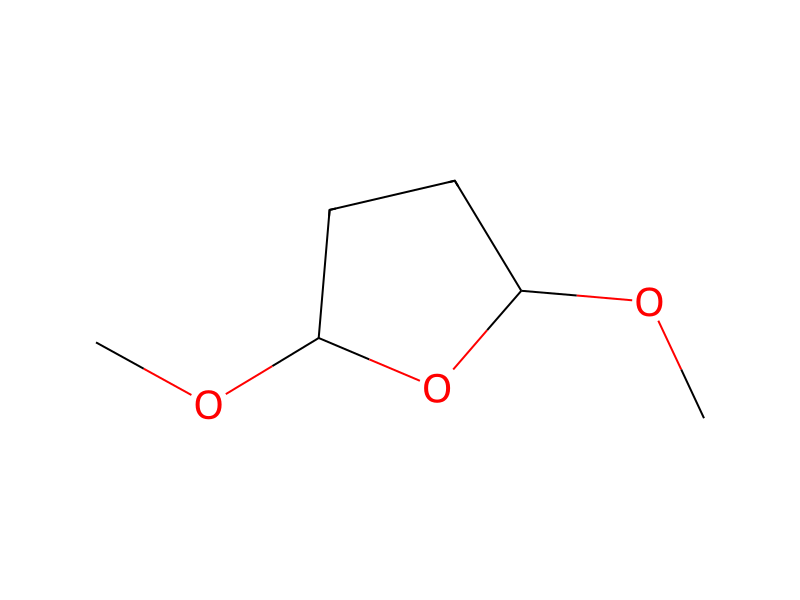
2,5-Dimethoxytetrahydrofuran → HCID 14962883, compound
Reaction equation

[NH2:1][C:2]1[N:3]=[C:4]([CH2:12][CH2:13][CH3:14])[NH:5][C:6]=1[C:7]([O:9][CH2:10][CH3:11])=[O:8].C([O-])(=O)C.[Na+].CO[CH:22]1[CH2:26][CH2:25][CH:24](OC)O1>C(O)(=O)C>[CH2:12]([C:4]1[NH:5][C:6]([C:7]([O:9][CH2:10][CH3:11])=[O:8])=[C:2]([N:1]2[CH:22]=[CH:26][CH:25]=[CH:24]2)[N:3]=1)[CH2:13][CH3:14]Participants
Reactant 3


Product 1

Reagents, catalysts & solvents 1

Procedure
A solution of ethyl 4-amino-2-propylimidazole-5-carboxylate from above (9.34 g, 47 mmol) and sodium acetate (23.2 g) in acetic acid (100 mL) was heated to reflux and treated with 2,5-dimethoxy-tetrahydrofuran (6.75 mL, 52 mmol). The reaction was held at reflux for 30 minutes, then cooled back to room temperature with an ice bath. The majority of the acetic acid was evaporated under reduced pressure, then the residue was partitioned between ethyl acetate and 10% aqueous K2CO3 (120 mL) each. The organic layer was dried over MgSO4 and evaporated. The residue was purified by flash chromatography on silica gel, eluting with CH2Cl2 -ethyl acetate (80:20). Evaporation of solvents gave a solid which was recrystallized from hexane/EtOAc (1:1) to give 7.4 g of the title compound, mp 134°-135° C.; MS (CI), 248 (m +1).
Workup
- temperatureto reflux
- temperatureat reflux for 30 minutes
- customThe majority of the acetic acid was evaporated under reduced pressure
- customthe residue was partitioned between ethyl acetate and 10% aqueous K2CO3 (120 mL) each
- dry with materialThe organic layer was dried over MgSO4
- customevaporated
- customThe residue was purified by flash chromatography on silica gel
- washeluting with CH2Cl2 -ethyl acetate (80:20)
- customEvaporation of solvents
- customgave a solid which
- customwas recrystallized from hexane/EtOAc (1:1)
Sources & evidence
- ORD record
- ord-7479a98218bd464a9071c382448dad5c
- Source dataset
- uspto-grants-1995_02
- Patent number
- US05389661
Reaction notes
Loading…