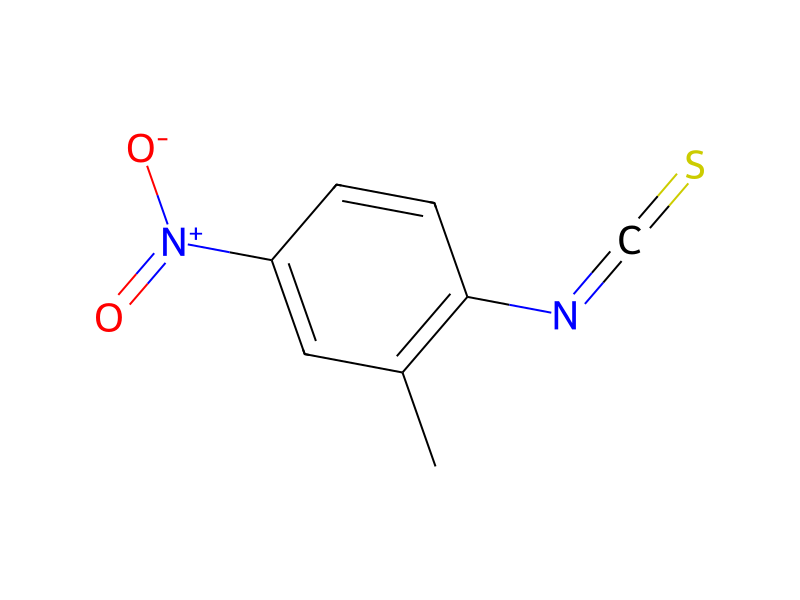
2-Methyl-4-nitrophenyl isothiocyanate → 2-(2-Methyl-4-nitrophenylimino)-3-(1-cyclohexyl-1-ethyl)-1,3-thiazolidine
Reaction equation

[Cl-].Cl[CH2:3][CH2:4][NH2+:5][CH:6]([CH:8]1[CH2:13][CH2:12][CH2:11][CH2:10][CH2:9]1)[CH3:7].[CH3:14][C:15]1[CH:20]=[C:19]([N+:21]([O-:23])=[O:22])[CH:18]=[CH:17][C:16]=1[N:24]=[C:25]=[S:26]>>[CH3:14][C:15]1[CH:20]=[C:19]([N+:21]([O-:23])=[O:22])[CH:18]=[CH:17][C:16]=1[N:24]=[C:25]1[N:5]([CH:6]([CH:8]2[CH2:13][CH2:12][CH2:11][CH2:10][CH2:9]2)[CH3:7])[CH2:4][CH2:3][S:26]1Participants
3


Procedure
1-Cyclohexyl-1-ethylamine was converted to N-(2-hydroxyethyl)-N-(1-cyclohexyl-1-ethyl)amine according to Method B5a. The alcohol was reacted with SOCl2 according to Method B7a to give N-(2-chloroethyl)-N-(1-cyclohexyl -1-ethyl)ammonium chloride. The chloroethylamine was reacted with 2-methyl-4-nitrophenyl isothiocyanate according to Method C1a to give 2-(2-methyl-4-nitrophenylimino)-3-(1-cyclohexyl-1-ethyl)-1,3-thiazolidine.
Sources & evidence
- ORD record
- ord-86c9079b29274ce39c465557da60751e
- Source dataset
- uspto-grants-2002_03
- Patent number
- US06353006B1
Reaction notes
Loading…