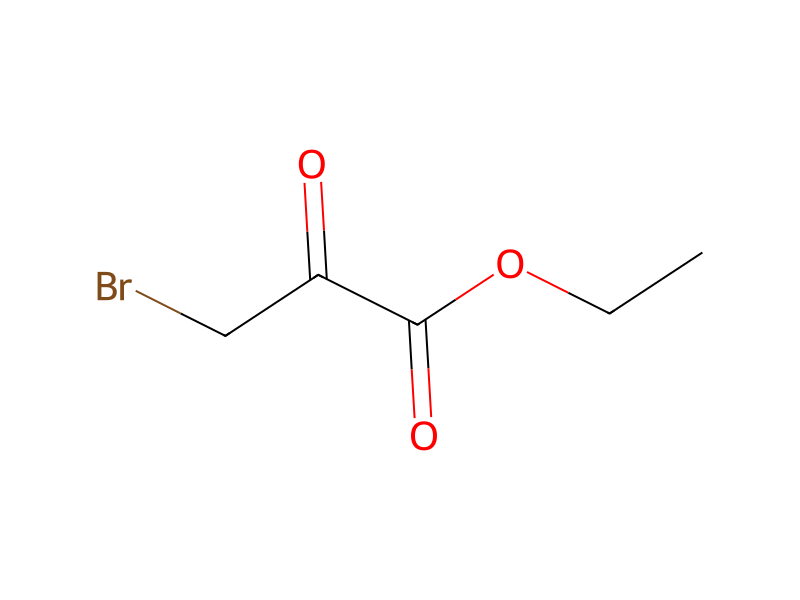
Ethyl bromopyruvate → Ethyl 2-(pyridin-4-YL)thiazole-4-carboxylate
Reaction equation

[C:1]([NH2:9])(=[S:8])[C:2]1[CH:7]=[CH:6][N:5]=[CH:4][CH:3]=1.Br[CH2:11][C:12](=O)[C:13]([O:15][CH2:16][CH3:17])=[O:14]>C(O)C>[N:5]1[CH:6]=[CH:7][C:2]([C:1]2[S:8][CH:11]=[C:12]([C:13]([O:15][CH2:16][CH3:17])=[O:14])[N:9]=2)=[CH:3][CH:4]=1Participants
4
Reactant 2

Product 1

Reagents, catalysts & solvents 1

Procedure
A solution of thioisonicotinamide (5.0 g) and ethyl bromopyruvate (7.22 g) in ethanol (90 ml) was heated for 5 hours under reflux and concentrated. To the residue were added sodium bicarbonate solution and ethyl acetate, and the organic layer was separated, washed with water and sodium chloride solution, dried and concentrated. The residue was purified with silica gel column chromatography (ethyl acetate) to give pale yellow solid of ethyl 2-(4-pyridyl)-4-thiazolecarboxylate (4.55 g).
Workup
- temperatureunder reflux
- concentrationconcentrated
- additionTo the residue were added sodium bicarbonate solution and ethyl acetate
- customthe organic layer was separated
- washwashed with water and sodium chloride solution
- customdried
- concentrationconcentrated
- customThe residue was purified with silica gel column chromatography (ethyl acetate)
Sources & evidence
- ORD record
- ord-940033cbb1704799b94e189e7df9d7a6
- Source dataset
- uspto-grants-2002_03
- Patent number
- US06359134B1
Reaction notes
Loading…