Sodium Carbonate → Methyl 2-chloro-3-hydroxyiminomethyl-4-methylsulfonylbenzoate
Reaction equation

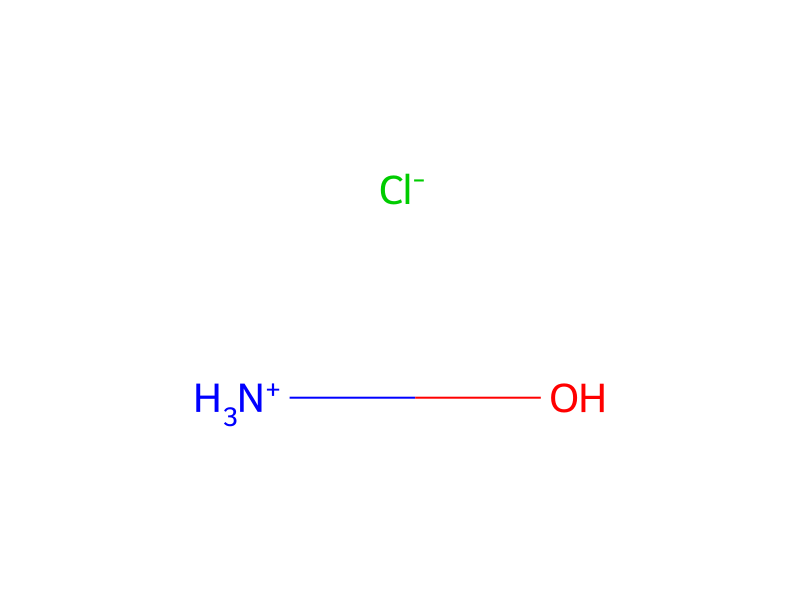
[Cl:1][C:2]1[C:11]([CH:12]=O)=[C:10]([S:14]([CH3:17])(=[O:16])=[O:15])[CH:9]=[CH:8][C:3]=1[C:4]([O:6][CH3:7])=[O:5].[Cl-].[OH:19][NH3+:20].C(=O)([O-])[O-].[Na+].[Na+]>CO.O>[Cl:1][C:2]1[C:11]([CH:12]=[N:20][OH:19])=[C:10]([S:14]([CH3:17])(=[O:16])=[O:15])[CH:9]=[CH:8][C:3]=1[C:4]([O:6][CH3:7])=[O:5]Participants
6





Procedure
55.23 g (0.199 mol) of methyl 2-chloro-3-formyl-4-methylsulfonylbenzoate are suspended in 400 ml of methanol/100 ml of water and treated with 15.27 g (0.219 mol) of hydroxylammonium chloride. 11.56 g (0.11 mol) of sodium carbonate—dissolved in 100 ml of water—are then slowly added dropwise at room temperature. After stirring at room temperature for 4 hours, the methanol is removed in a rotary evaporator, the residue is diluted with water and the mixture is extracted three times with dichlormethane. 56.05 g (96% of theory) of methyl 2-chloro-3 hydroximinomethyl-4-methylsulfonylbenzoate having a melting point of 126-130° C. are obtained.
Workup
- additionare then slowly added dropwise at room temperature
- customthe methanol is removed in a rotary evaporator
- additionthe residue is diluted with water
- extractionthe mixture is extracted three times with dichlormethane
Sources & evidence
- ORD record
- ord-0d46fc7f029142a692be586fe3a9b785
- Source dataset
- uspto-grants-2001_04
- Patent number
- US06211216B1
Reaction notes
Loading…