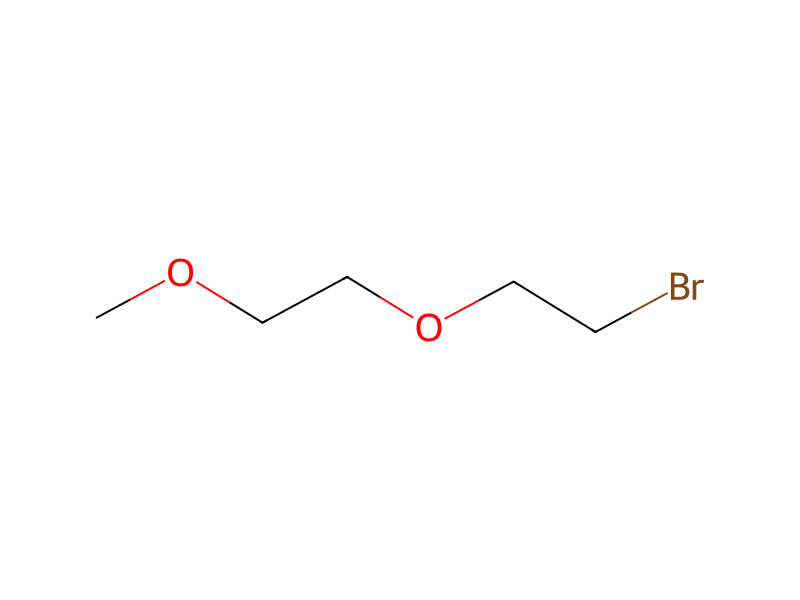
1-Bromo-3,6-dioxaheptane → HCID 22007311, compound
Reaction equation

[CH2:1]([N:8]1[C:16]2[C:15](=[O:17])[NH:14][C:13](=[O:18])[N:12]([CH2:19][CH3:20])[C:11]=2[N:10]=[CH:9]1)[C:2]1[CH:7]=[CH:6][CH:5]=[CH:4][CH:3]=1.Br[CH2:22][CH2:23][O:24][CH2:25][CH2:26][O:27][CH3:28]>>[CH2:1]([N:8]1[C:16]2[C:15](=[O:17])[N:14]([CH2:22][CH2:23][O:24][CH2:25][CH2:26][O:27][CH3:28])[C:13](=[O:18])[N:12]([CH2:19][CH3:20])[C:11]=2[N:10]=[CH:9]1)[C:2]1[CH:7]=[CH:6][CH:5]=[CH:4][CH:3]=1Participants
3


Procedure
14 g (0.037 mol) of 7-benzyl-3-ethyl-1-(2-(2-methoxyethoxy)ethyl)xanthine were prepared from 7-benzyl-3-ethylxanthine (prepared according to Example 5a) and 1-bromo-2-(2-methoxyethoxy)ethane (prepared according to Example 2b) in a yield of 98% of theory (C19H24N4O4 (MW=372.4 g/mol); melting point after recrystallization from diisopropyl ether: 64° C.
Workup
- customafter recrystallization from diisopropyl ether
- custom64° C.
Sources & evidence
- ORD record
- ord-8856dd476a59474ca7682cda70fbff45
- Source dataset
- uspto-grants-2001_04
- Patent number
- US06214992B1
Reaction notes
Loading…