Triethylaluminum → Triethylaluminum
Reaction equation

[CH2:1]([Mg:5][CH2:6][CH2:7]CC)[CH2:2][CH2:3][CH3:4].[CH2:10]([Al:12]([CH2:15][CH3:16])[CH2:13][CH3:14])[CH3:11]>CCCCCCC>[CH2:1]([Mg:5][CH2:6][CH3:7])[CH2:2][CH2:3][CH3:4].[CH2:10]([Al:12]([CH2:15][CH3:16])[CH2:13][CH3:14])[CH3:11]Participants
5
Reactant 2
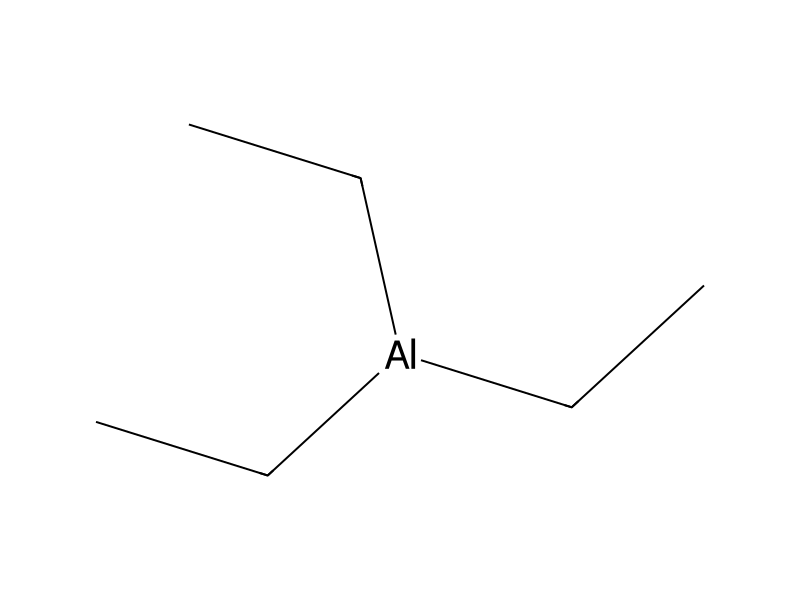

Product 2

Reagents, catalysts & solvents 1

Procedure
In this case, the n-heptane solution of the complex consisting of di-n-butyl magnesium and tri-ethyl aluminum which was used in Example 51 was replaced with a reaction product obtained from 161 ml of an n-heptane solution of n-butyl ethyl magnesium (manufactured by Texas Alkyls Inc. of U.S.A., MAGALABEM, Mg concentration 0.65 mol/liter) and 4.3 ml of tri-ethyl aluminum. With the exception of this, a catalytic component was prepared and propylene was polymerized in exactly the same manner as in Example 1. The results of polymerization were: A=445, H.I.=94.8 and ρB=0.45.
Sources & evidence
- ORD record
- ord-58b702f309ce4da4bad67aed9f544bc8
- Source dataset
- uspto-grants-1984_04
- Patent number
- US04442225
Reaction notes
Loading…