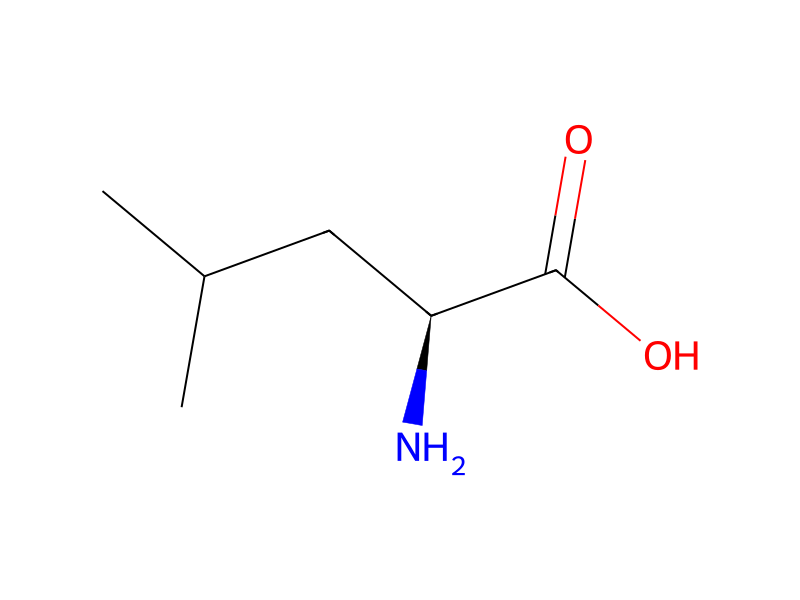
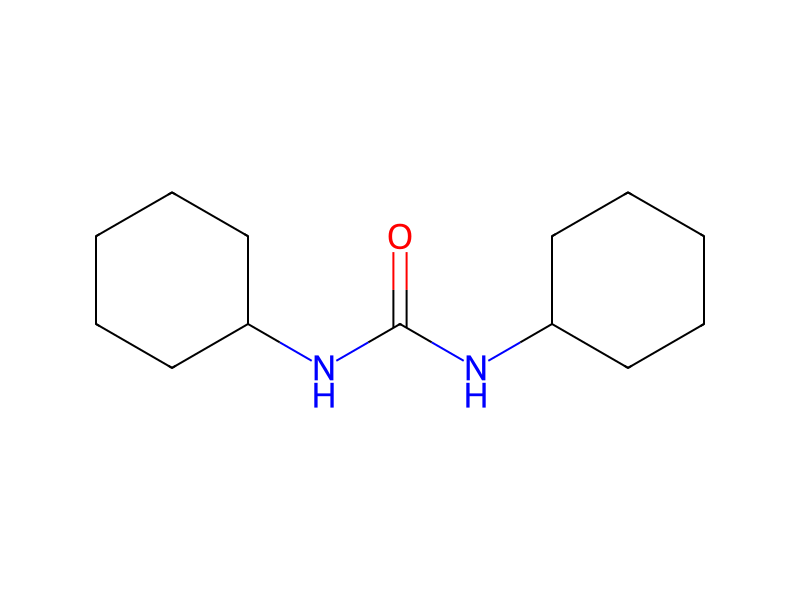
L-Leucine → N,N'-Dicyclohexylurea
Reaction equation

Cl.N[C@H](C(OC)=[O:9])CC(C)C.N[C@H](C(O)=O)CC(C)C.CCC(OC(C[N+](C)(C)C)CC([O-])=O)=O.[CH:36]1([N:42]=[C:43]=[N:44][CH:45]2[CH2:50][CH2:49][CH2:48][CH2:47][CH2:46]2)[CH2:41][CH2:40][CH2:39][CH2:38][CH2:37]1>CC(C)=O.N1C=CC=CC=1>[C:43]([NH:42][CH:36]1[CH2:37][CH2:38][CH2:39][CH2:40][CH2:41]1)([NH:44][CH:45]1[CH2:50][CH2:49][CH2:48][CH2:47][CH2:46]1)=[O:9]Participants
7





Procedure
To 1.82 grams (0.01 moles) of methyl leucinate hydrochloride 0.8 cc (0.01 moles) of pyridine in 15 cc of acetone were added. Pyridine hydrochloride precipitated, which was filtered off. To the methyl ester of leucine free base was added an aqueous solution of 2.54 grams (0.01 moles) of propionyl carnitine in 3.5 cc. Then, 4.12 grams of dicyclohexyl carbodiimide dissolved in 5 cc of acetone were slowly added under stirring to the solution. A precipitate of dicyclohexylurea formed which after 16 hours was filtered off. The mother liquors were concentrated under vacuum. The raw product thus obtained was crystallized from methanol-acetone, furnishing a solid, very hygroscopic product (yield: 75%).
Workup
- customPyridine hydrochloride precipitated
- filtrationwhich was filtered off
- additionwere slowly added
Sources & evidence
- ORD record
- ord-dd38be54ca81470fb9dd02a98629ec54
- Source dataset
- uspto-grants-1984_04
- Patent number
- US04443475
Reaction notes
Loading…