Vanillin → HCID 136138631, compound
Reaction equation

[CH3:1][C:2]1[C:11]2[C:6](=[CH:7][CH:8]=[CH:9][CH:10]=2)[N:5]=[CH:4][CH:3]=1.O=[CH:13][C:14]1[CH:22]=[CH:21][C:19]([OH:20])=[C:16]([O:17][CH3:18])[CH:15]=1>C(OC(=O)C)(=O)C>[OH:20][C:19]1[CH:21]=[CH:22][C:14]([CH:13]=[CH:1][C:2]2[C:11]3[C:6](=[CH:7][CH:8]=[CH:9][CH:10]=3)[N:5]=[CH:4][CH:3]=2)=[CH:15][C:16]=1[O:17][CH3:18]Participants
Reactant 2
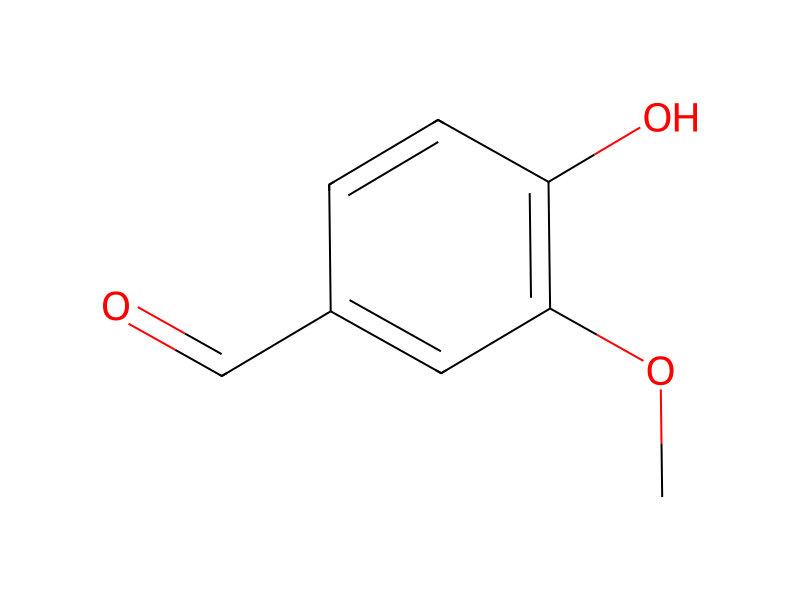

Product 1

Reagents, catalysts & solvents 1

Procedure
In 62.9 g of acetic anhydride, 26.73 g of 4-methylquinoline and 31.25 g of vanillin were refluxed overnight. The resultant reaction mixture was treated with an alkali. The product thus obtained was recrystallized via butyl cellosolve, to afford 29 g of 4-[2-(4-hydroxy-3-methoxyphenyl)-ethenyl]-quinoline having a melting point of 217°-219° C. From 0.55 g of this product, 1.75 g of triethylamine, 1.66 g of methacrylic acid chloride, and 16 cm3 of N,N-dimethylacetamide, there was obtained 4.70 g (80.3% in yield) of 4[2-(4-methacroyloxy-3-methoxyphenyl)-ethenyl]-quinoline having a melting point of 134°-135° C. This product was recrystallized via ethyl acetate and assayed by infrared absorption spectrometry and elementary analysis for its chemical structure.
Workup
- customThe resultant reaction mixture
- additionwas treated with an alkali
- customThe product thus obtained
- customwas recrystallized via butyl cellosolve
Sources & evidence
- ORD record
- ord-631c482ce57d4b37b82f7681c93834c8
- Source dataset
- uspto-grants-1984_04
- Patent number
- US04444868
Reaction notes
Loading…