3-Fluorobenzaldehyde → 5-Propyl-2-(3-fluorophenyl)-1,3-dioxane
Reaction equation

[CH2:1]([CH:4]([CH2:7][OH:8])[CH2:5][OH:6])[CH2:2][CH3:3].[F:9][C:10]1[CH:11]=[C:12]([CH:15]=[CH:16][CH:17]=1)[CH:13]=O>C1(C)C=CC=CC=1>[CH2:1]([CH:4]1[CH2:7][O:8][CH:13]([C:12]2[CH:15]=[CH:16][CH:17]=[C:10]([F:9])[CH:11]=2)[O:6][CH2:5]1)[CH2:2][CH3:3]Participants
4
Reactant 2
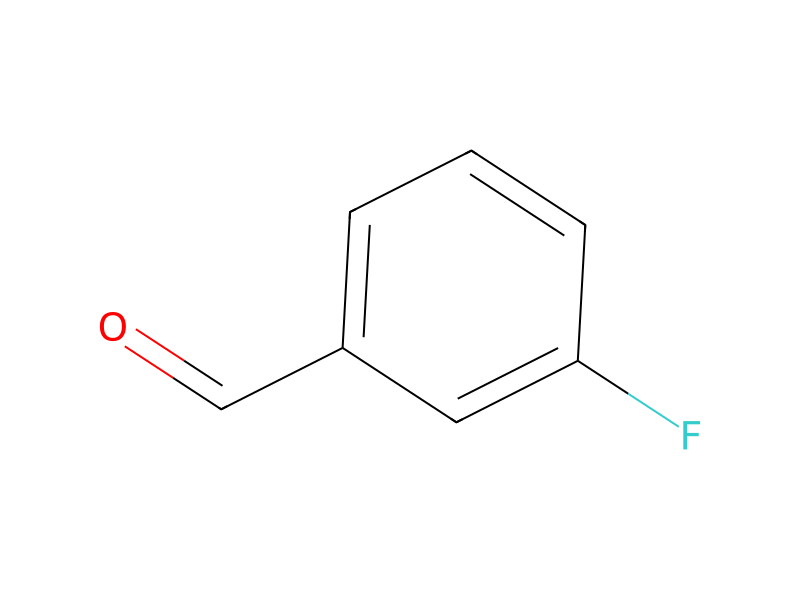

Product 1

Reagents, catalysts & solvents 1

Procedure
2-Propyl-1,3-propanediol (138.0 g; 1.17 mol) and 3-fluorobenzaldehyde (138.0 g; 1.11 mol) were dissolved in toluene (1.5 liters), and PTS (7 g) was added. The mixture was refluxed for 3 hours while being dehydrated with a Dean-Stark's device. The resultant reaction mixture was washed sequentially with saturated sodium bicarbonate solution and saturated brine, and then dried over magnesium sulfate. Subsequently, the solvent was evaporated. The residue was recrystallized twice from heptane, to thereby obtain 81.2 g (362 mmol) of 5-propyl-2-(3-fluorophenyl)-1,3-dioxane. The yield of the compound from 3-fluorobenzaldehyde was 32.6%.
Workup
- additionPTS (7 g) was added
- temperatureThe mixture was refluxed for 3 hours
- customThe resultant reaction mixture
- washwas washed sequentially with saturated sodium bicarbonate solution and saturated brine
- dry with materialdried over magnesium sulfate
- customSubsequently, the solvent was evaporated
- customThe residue was recrystallized twice from heptane
Sources & evidence
- ORD record
- ord-58ffe98ff8d0438ca2f921319ac60a83
- Source dataset
- uspto-grants-1999_01
- Patent number
- US05858272
Reaction notes
Loading…