P-Toluenesulfonamide → Tosylchloramide
Reaction equation

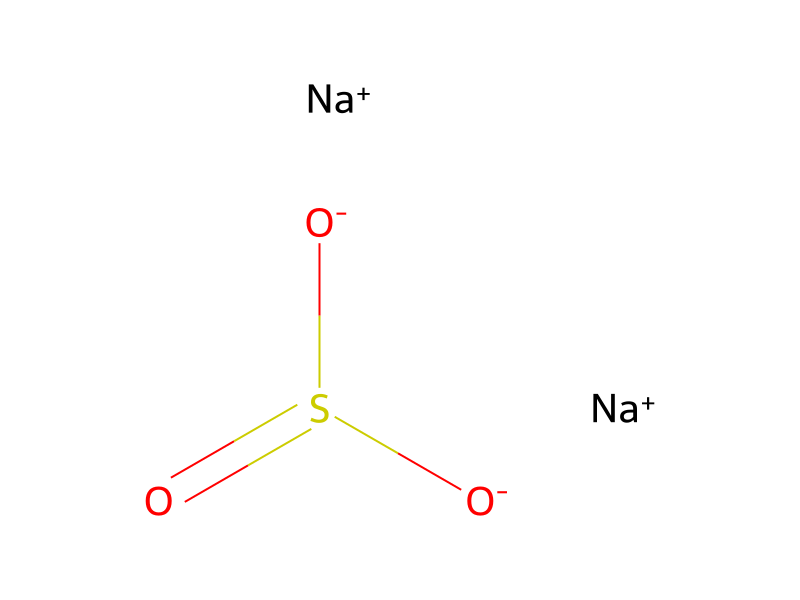
CC[C@H]1[C@H]2C[C@H]([C@H](OC3C4C(=CC=CC=4)C(O[C@H](C4C=CN=C5C=4C=C(OC)C=C5)[C@@H]4N5C[C@H](CC)[C@@H](CC5)C4)=NN=3)C3C=CN=C4C=3C=C(OC)C=C4)N(CC2)C1.[CH3:59][C:60]1[CH:65]=[CH:64][C:63]([S:66]([N-:69][Cl:70])(=[O:68])=[O:67])=[CH:62][CH:61]=1.O.O.O.[Na+].S([O-])([O-])=O.[Na+].[Na+].CC1C=CC(S(N)(=O)=O)=CC=1>C(#N)C.O.C(#N)C.O>[CH3:59][C:60]1[CH:65]=[CH:64][C:63]([S:66]([NH:69][Cl:70])(=[O:68])=[O:67])=[CH:62][CH:61]=1Participants
Reactant 4



Product 1

Reagents, catalysts & solvents 3
Procedure
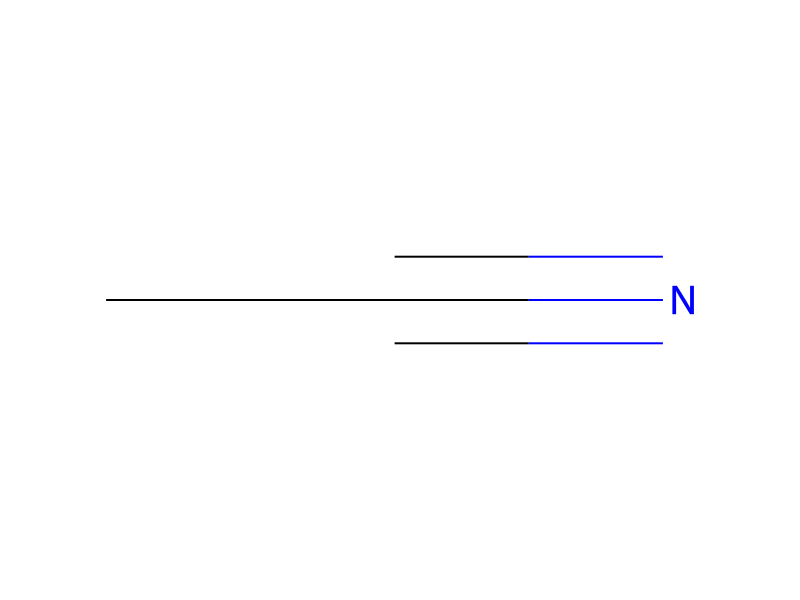
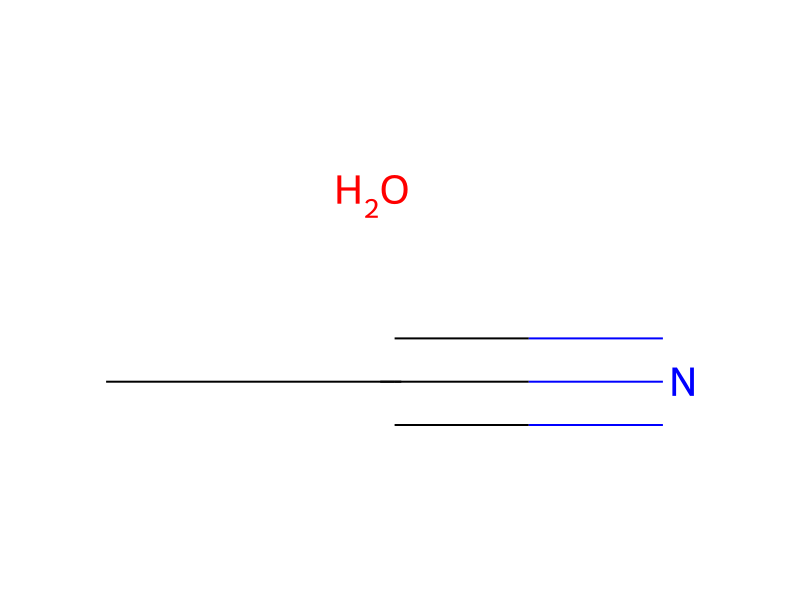
General procedure 1 (FIG. 4): Catalytic asymmetric aminohydroxylation in 1:1 acetonitrile/water (used for synthesis of compounds 2, 5, 6, 7, 8 or 9). To a stirred solution of (DHQ)2 -PHAL (0.11 g, 0.14 mmol, 5 mol %) in 20 mL of acetonitrile and 20 mL of water, in any convenient-sized glass vessel or vial, was added desired olefin (all commercially available from Aldrich, FIG. 4, 2.8 mmol), Chloramine-T trihydrate (2.42 g, 8.4 mmol, 3 eq) and K2OsO2 (OH)4 (41.6 mg, 0.112 mmol, 4 mol %). As the reaction proceeded to completion over the course of about one and half hours at room temperature, the color of the solution changed from yellow to pale green, then deep green and finally back to yellow (for entry 3 in Table 1, the yellow color remains throughout). After addition of aqueous sodium sulfite (1.0 g in 15 mL H2O), the phases were separated, and the aqueous phase extracted with ethyl acetate (3×15 mL). The combined organic extracts were washed with brine, dried over MgSO4 and the solvent concentrated to give the crude product, which also contains the p-toluenesulfonamide by-product produced upon the reduction of the excess Chloramine-T. In the case of the ethyl crotonate derivative, product 5, flash chromatography (6:4:1 hexane/CHCl3/MeOH) of this material provided 0.44 g (52% yield, 74% ee) of (2R,3S)-ethyl-N-(p-toluenesulfonyl)-2-hydroxy-3-amino-butanoate (5) as a clear oil eluting before the p-toluenesulfonamide impurity (52% yield, 74% ee). Similar purification provides compounds 2, 6, 7, 8 and 9. with the indicated yields and conditions shown in FIG. 4. NOTE: Replacement of the 3 eq of Chloramine-T with 1.5 eq of Chloramine-T and 1.5 eq of Et4NOAc gives comparable results and reduces the amount of p-toluenesulfonamide by-product formed. This can greatly simplify product isolation, especially in cases where the product and the toluenesulfonamide have similar chromatographic mobilities.
Workup
- customproceeded to completion over the course of about one and half hours at room temperature
- customthe phases were separated
- extractionthe aqueous phase extracted with ethyl acetate (3×15 mL)
- washThe combined organic extracts were washed with brine
- dry with materialdried over MgSO4
- concentrationthe solvent concentrated
- customto give the crude product, which
Sources & evidence
- ORD record
- ord-5de7ef43181548ecbe58e84eaa968452
- Source dataset
- uspto-grants-1999_01
- Patent number
- US05859281
Reaction notes
Loading…