Sodium Hydroxide → HCID 178526413, compound
Reaction equation

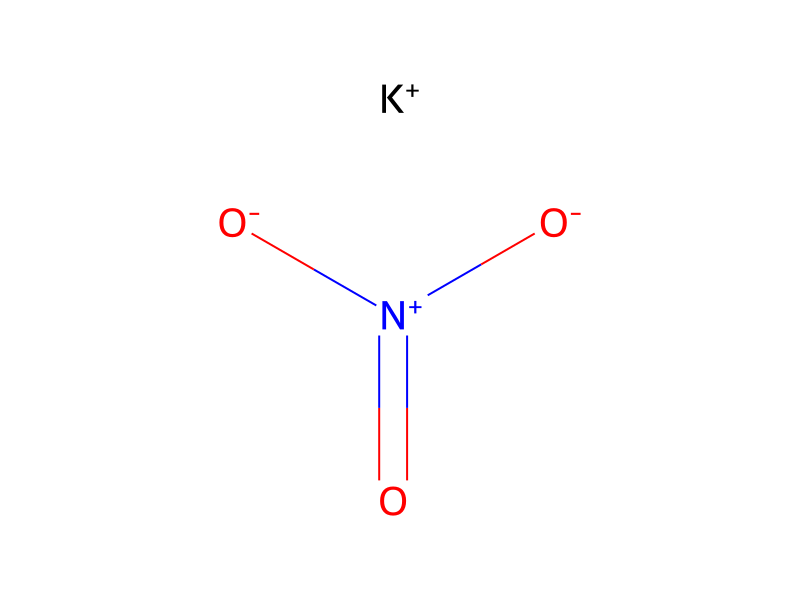
[OH:1][C:2]1[C:3]([OH:16])=[N:4][C:5]2[C:6]([N:15]=1)=[C:7]1[C:12](=[CH:13][CH:14]=2)[N:11]=[CH:10][CH:9]=[N:8]1.[N+:17]([O-])([O-:19])=[O:18].[K+].[OH-].[Na+]>S(=O)(=O)(O)O>[OH:1][C:2]1[C:3]([OH:16])=[N:4][C:5]2[C:6]([N:15]=1)=[C:7]1[C:12](=[C:13]([N+:17]([O-:19])=[O:18])[CH:14]=2)[N:11]=[CH:10][CH:9]=[N:8]1Participants
5
Reactant 3


Product 1

Reagents, catalysts & solvents 1

Procedure
To a solution of 0,38 g (1,4 mmol) 2,3-dihydroxy-pyrazino(2,3-f)quinoxaline in 25 ml concentrated sulfuric acid was added at 0° C. 0,28 g (2,8 mmol) potassium nitrate. Stirring was continued at 0° C. for 30 min. and at 25° C. for 24 h. The reaction mixture was poured into 100 ml ice-water. The solution was added 10 N sodium hydroxide to pH 7, and then extracted with ethyl acetate (5×100 ml). The combined and dried ethyl acetate phases were evaporated to give 0,17 g (47%) 2,3-dihydroxy-6-nitropyrazino(2,3-f)quinoxaline, m.p. >300° C. NMR (DMSO-d6) 9.10 (2H,s), 8.23 (1H,s).
Workup
- extractionextracted with ethyl acetate (5×100 ml)
- customdried ethyl acetate phases were evaporated
Sources & evidence
- ORD record
- ord-c3a49754096d47c49a759b15ddb4e04a
- Source dataset
- uspto-grants-1991_10
- Patent number
- US05057516
Reaction notes
Loading…