5-(2-Aminophenylethynyl)-2,4-dimethoxybenzaldehyde → 5-(1H-indol-2-yl)-2,4-dimethoxybenzaldehyde
Reaction equation

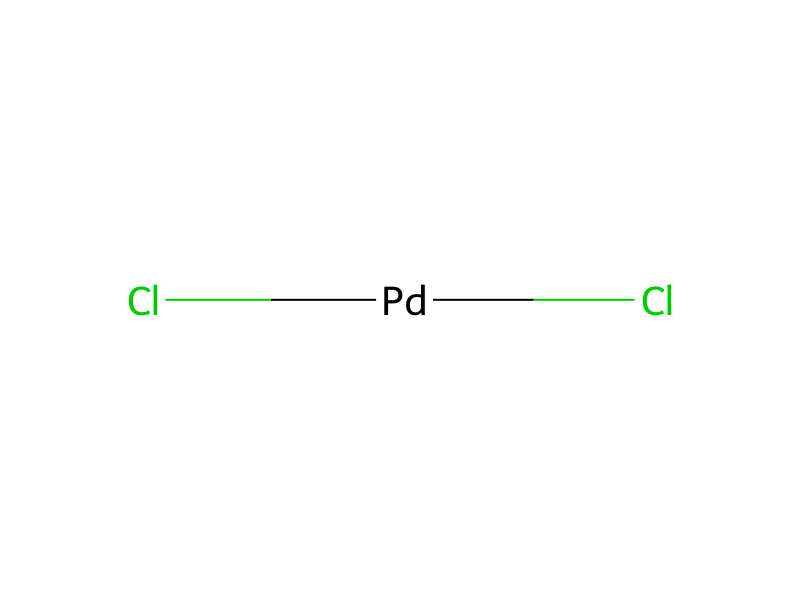
[NH2:1][C:2]1[CH:7]=[CH:6][CH:5]=[CH:4][C:3]=1[C:8]#[C:9][C:10]1[C:11]([O:20][CH3:21])=[CH:12][C:13]([O:18][CH3:19])=[C:14]([CH:17]=1)[CH:15]=[O:16]>C(#N)C.Cl[Pd]Cl>[NH:1]1[C:2]2[C:3](=[CH:4][CH:5]=[CH:6][CH:7]=2)[CH:8]=[C:9]1[C:10]1[C:11]([O:20][CH3:21])=[CH:12][C:13]([O:18][CH3:19])=[C:14]([CH:17]=1)[CH:15]=[O:16]Participants
4
Reactant 1

Product 1

Reagents, catalysts & solvents 2

Procedure
A solution of PdCl2 (0.066 g, 0.373 mmol) in 200 ml of acetonitrile was heated to reflux. To this solution was added 5-(2-amino-phenylethynyl)-2,4-dimethoxybenzaldehyde (Ex-35C, 1.4 g, 5 mmol) portion by portion slowly so that no cloudiness of the solution occurred. After the addition, the reaction was kept at reflux for another 10 min. Then the mixture was cooled to room temperature and filtered. The filtrate was treated with 5 g of 3-mercaptopropyl functional silica gel with stirring for 30 min and filtered. The filtrate was concentrated and the residue was recrystallized from EtOAc/Hexane to give 0.84 g (60%) of 5-(1H-indol-2-yl)-2,4-dimethoxybenzaldehyde, analytical dada identical as in Ex-57D.
Workup
- additionAfter the addition
- temperatureat reflux for another 10 min
- filtrationfiltered
- additionThe filtrate was treated with 5 g of 3-mercaptopropyl functional silica gel
- filtrationfiltered
- concentrationThe filtrate was concentrated
- customthe residue was recrystallized from EtOAc/Hexane
Sources & evidence
- ORD record
- ord-6012d6b30af64b9ca756836885894188
- Source dataset
- uspto-grants-2007_02
- Patent number
- US07173129B2
Reaction notes
Loading…