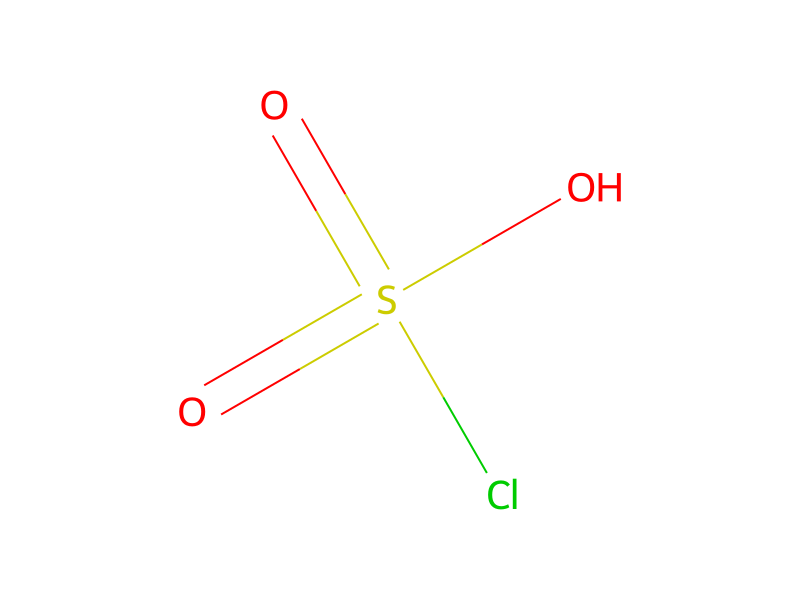
Chlorosulfonic acid → 4-[4-(Chlorosulfonyl)phenoxy]-2-butynyl acetate
Reaction equation

[C:1]([O:4][CH2:5][C:6]#[C:7][CH2:8][O:9][C:10]1[CH:15]=[CH:14][CH:13]=[CH:12][CH:11]=1)(=[O:3])[CH3:2].[Cl:16][S:17](O)(=[O:19])=[O:18].C(Cl)(=O)C(Cl)=O>ClCCl>[C:1]([O:4][CH2:5][C:6]#[C:7][CH2:8][O:9][C:10]1[CH:11]=[CH:12][C:13]([S:17]([Cl:16])(=[O:19])=[O:18])=[CH:14][CH:15]=1)(=[O:3])[CH3:2]Participants
Reactant 3
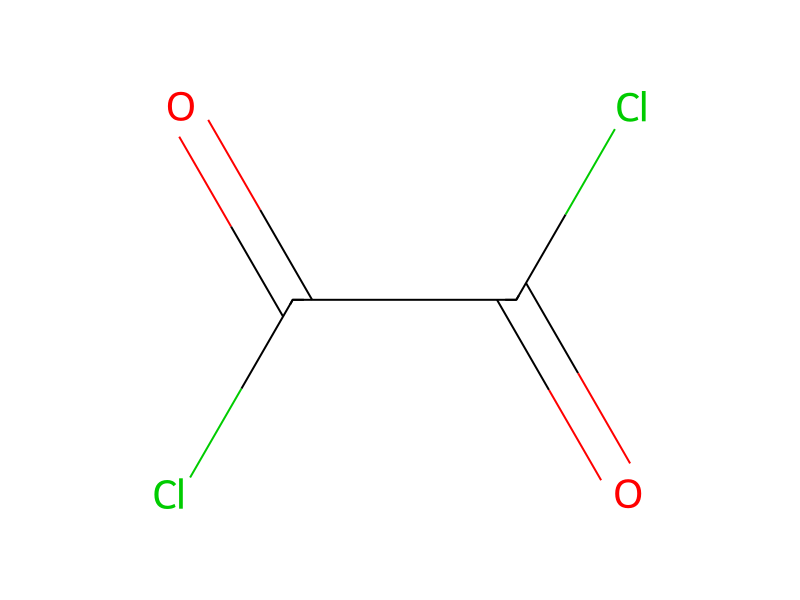

Product 1

Reagents, catalysts & solvents 1
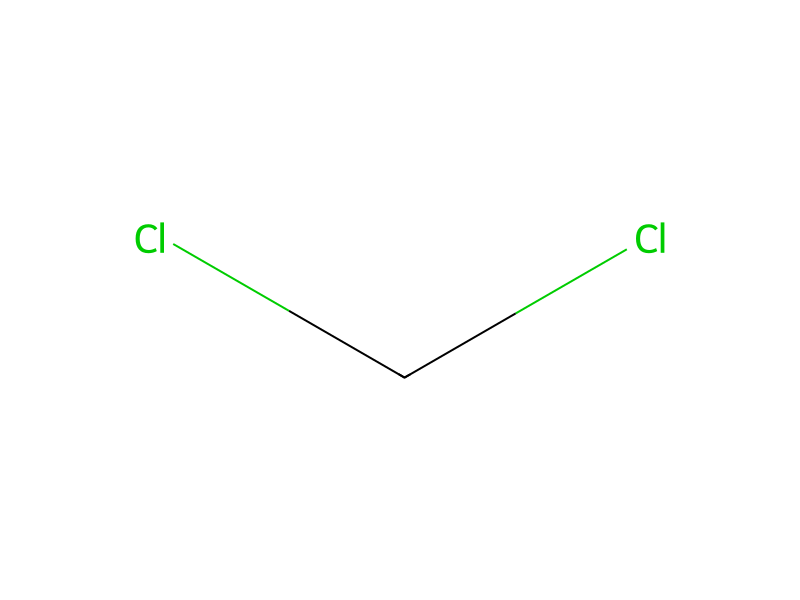
Conditions
- Temperature
- -7.5 °C
Procedure
A 22-L reactor was equipped with a thermometer, a water condenser, a cooling bath/heating mantle, and an addition funnel, and dichloromethane (11 L) was charged. A solution of 4-phenoxy-2-butynyl acetate in dichloromethane (2.04 kg, 10 mol) was charged to the reactor, followed by 2 L of dichloromethane and the solution was cooled −5 to −10° C. Chlorosulfonic acid (0.73 L, 1.28 kg, 11 mol) was added slowly via an addition funnel maintaining temperature between −5 and 0° C. After the addition was complete, the cooling bath was removed and the reaction mixture was stirred for 1–2 h at 18–22° C. The progress of the reaction was monitored by TLC or HPLC (disappearance of starting material). DMF (155 mL, 146 g) was added portion wise. The reaction mixture was heated to reflux (38–40° C.). Oxalyl chloride (1.13 L, 1.65 kg, 13 mol) was added through an addition funnel into the boiling solution over a period of 2–3 h maintaining gentle reflux. After all the oxalyl chloride was added, reflux was continued for 1 h. The completion of reaction was checked by HPLC (less than 3% of intermediate sulfonic acid remaining). After completion, the heating was stopped and the reaction mixture was cooled to 18–22° C. and stirred for 16 h. The reaction mixture was quenched into a 50-L reactor with 5 L of cold (5 to 10° C.) water and stirred for 10–20 min while maintaining the temperature below 20° C. The organic layer was separated and the aqueous layer was extracted with (2 L) of fresh dichloromethane. The combined organic layers were washed with 4 L of sodium bicarbonate solution until pH=7–8. The dichloromethane layer was separated and concentrated in vacuo at 35–40° C. to a volume of 5 to 7 L. This solution was mixed with 3 kg of silica gel and concentrated in vacuo until a free-flowing powder was obtained. The silica gel powder was transferred to a filter funnel with a Celite bed and eluted with 22 L of isopropyl ether. The ether solution was concentrated in vacuo to yield about 3 L of a slightly viscous liquid. This residue was transferred to a 5-L reaction flask with overhead stirrer, seeded and stirred for 16–18 h at 18–22° C. Crystallization began after several hours. Stirring continued at low temperature (0 to −10° C.). The solid was filtered on Buchner funnel lined with polypropylene and washed with 2 L of cold (5° C.) IPE, then dried under vacuum (30 mm) at 18–20° C. to yield 1.1 kg (55%, HPLC strength 94.8%) of product.
Workup
- customA 22-L reactor was equipped with a thermometer, a water condenser
- additionwas charged
- temperaturemaintaining temperature between −5 and 0° C
- additionAfter the addition
- customthe cooling bath was removed
- additionDMF (155 mL, 146 g) was added portion wise
- temperatureThe reaction mixture was heated
- temperatureto reflux (38–40° C.)
- temperaturemaintaining gentle reflux
- temperaturereflux
- customThe completion of reaction
- temperaturethe reaction mixture was cooled to 18–22° C.
- stirringstirred for 16 h
- customThe reaction mixture was quenched into a 50-L reactor with 5 L of cold (5 to 10° C.) water
- stirringstirred for 10–20 min
- temperaturewhile maintaining the temperature below 20° C
- customThe organic layer was separated
- extractionthe aqueous layer was extracted with (2 L) of fresh dichloromethane
- washThe combined organic layers were washed with 4 L of sodium bicarbonate solution until pH=7–8
- customThe dichloromethane layer was separated
- concentrationconcentrated in vacuo at 35–40° C. to a volume of 5 to 7 L
- additionThis solution was mixed with 3 kg of silica gel
- concentrationconcentrated in vacuo until a free-flowing powder
- customwas obtained
- customThe silica gel powder was transferred to a filter funnel with a Celite bed
- washeluted with 22 L of isopropyl ether
- concentrationThe ether solution was concentrated in vacuo
- customto yield about 3 L of a slightly viscous liquid
- stirringstirred for 16–18 h at 18–22° C
- customCrystallization
- waitbegan after several hours
- stirringStirring
- customcontinued at low temperature (0 to −10° C.)
- filtrationThe solid was filtered on Buchner funnel
- washwashed with 2 L of cold (5° C.) IPE
- customdried under vacuum (30 mm) at 18–20° C.
- customto yield 1.1 kg (55%, HPLC strength 94.8%) of product
Sources & evidence
- ORD record
- ord-aa5d3fd1bf20430bb368163a620941ed
- Source dataset
- uspto-grants-2007_02
- Patent number
- US07179911B2
Reaction notes
Loading…