Hydrochloric Acid → HCID 11150543, compound
Reaction equation

[F:1][C:2]([F:12])([F:11])[C:3]1[CH:10]=[CH:9][C:6]([CH:7]=[O:8])=[CH:5][CH:4]=1.[CH3:13]/[C:14](/[C:17]([CH3:19])=O)=[N:15]\[OH:16].[ClH:20].COC(C)(C)C>C(O)(=O)C>[ClH:20].[CH3:13][C:14]1[N+:15]([O-:16])=[C:7]([C:6]2[CH:9]=[CH:10][C:3]([C:2]([F:11])([F:12])[F:1])=[CH:4][CH:5]=2)[O:8][C:17]=1[CH3:19]Participants


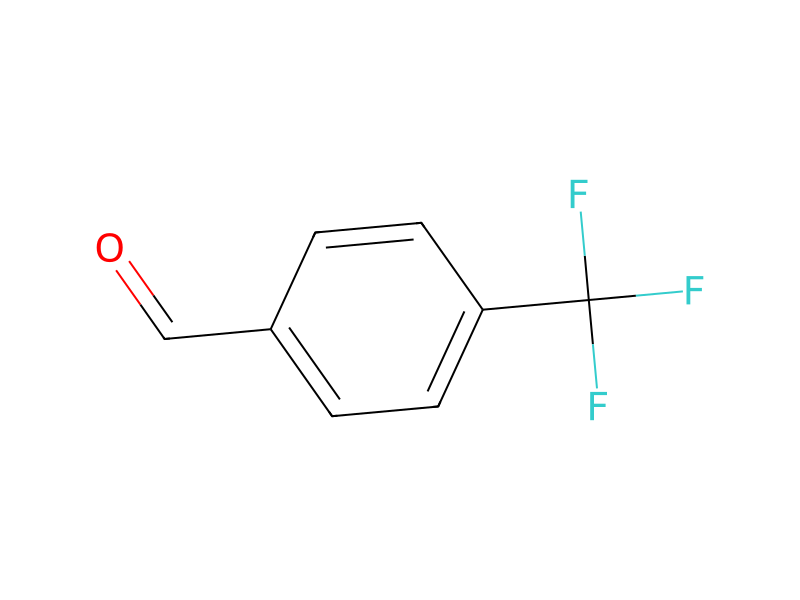



Conditions
- Temperature
- 10 °C
Procedure
Into a solution of 4-trifluoromethyl benzaldehyde (400.0 g, 2.3 mol) and 2,3-butanedione monoxime (212 g, 2.055 mol) in 800 mL of glacial acetic acid at 2–5° C., hydrogenchloride gas (250 g) is slowly bubbled for 1.5 hours. The mixture is stirred at the same temperature for 1 hour further. 3.75 L of t-butyl methyl ether are added while maintaining the temperature between 5–25° C. (first 400 mL addition is exothermic). The resulting suspension is stirred for 30 minutes, then cooled to 10° C. and the solids are collected by filtration. The filter cake is washed with 500 mL of t-butylmethyl ether, and dried at 55–60° C. (20 mbar) for 18 hours to afford 550 g (91% yield) of 4,5-dimethyl-2-[4-(trifluoromethyl)phenyl]-oxazole 3-oxide, hydrochloride salt: m.p. 182–184° C. (with decomposition).
Workup
- temperaturewhile maintaining the temperature between 5–25° C.
- addition(first 400 mL addition is exothermic)
- stirringThe resulting suspension is stirred for 30 minutes
- filtrationthe solids are collected by filtration
- washThe filter cake is washed with 500 mL of t-butylmethyl ether
- customdried at 55–60° C. (20 mbar) for 18 hours
Sources & evidence
- ORD record
- ord-68aa8510f47e4254929a99c6af58fff9
- Source dataset
- uspto-grants-2007_02
- Patent number
- US07183304B2
Reaction notes
Loading…