Acetic Acid → Cobalt diacetate
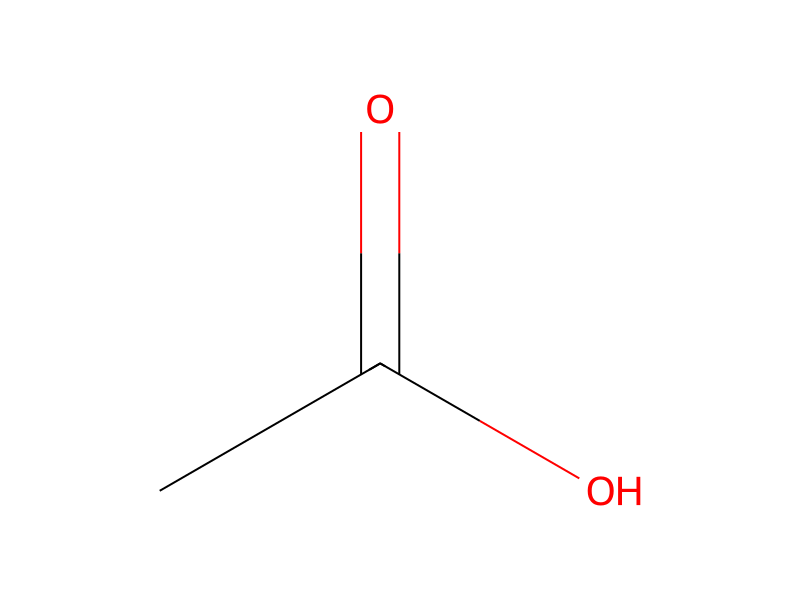
Reaction equation

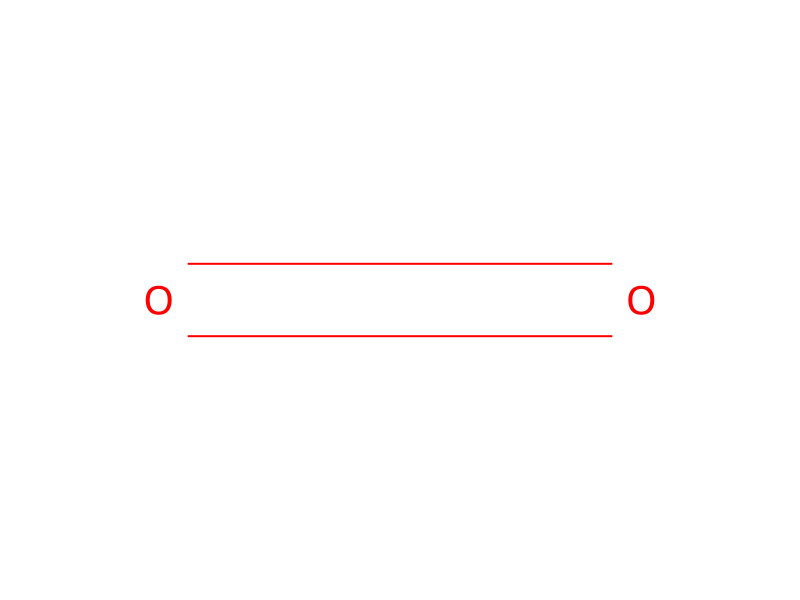
O=O.[CH-]=O.[CH-]=O.[C-]#[O+].[C-]#[O+].[C-]#[O+].[C-]#[O+].[C-]#[O+].[C-]#[O+].[Co:19].[Co+2].[C:21]([OH:24])(=[O:23])[CH3:22]>>[C:21]([O-:24])(=[O:23])[CH3:22].[Co+2:19].[C:21]([O-:24])(=[O:23])[CH3:22]Participants


Procedure
The C12–C14 α-olefin mixture from Example 1 with the composition shown in Table I was hydroformylated in the manner indicated in Example 1. Unlike Example 1, instead of the rhodium catalyst and the polyethyleneimine ligand, the hydroformylation catalyst used was dicobaltoctacarbonyl without any other ligand, the amount being 2 g of cobalt based on 1000 g of reactor contents. In order that the olefin conversion obtained was from 98 to 99%, as in Example 1, using the same olefin feed, a reactor temperature of 140° C. was required in both reactors. The (aldehyde+alcohol) selectivity was 94%, the paraffin selectivity was 3%, and the selectivity to give higher-boiling aldehyde condensation products was 3%. Once the pressure in the reactors had been released, the discharge was treated with aqueous acetic acid solution while introducing atmospheric oxygen, until the cobalt carbonyl had been oxidized to give cobalt acetate. The aqueous, cobalt-containing phase was separated off in a phase separator, and the organic phase, as in Example 1, hydrogenated and distilled. Table III gives the composition of the C13–C15 alcohol mixture.
Workup
- customthe selectivity to give higher-boiling
Sources & evidence
- ORD record
- ord-80d027c7138b40e293517e0cfe76fcbe
- Source dataset
- uspto-grants-2007_02
- Patent number
- US07183446B2
Reaction notes
Loading…