Formaldehyde → Benzoxazines
Reaction equation

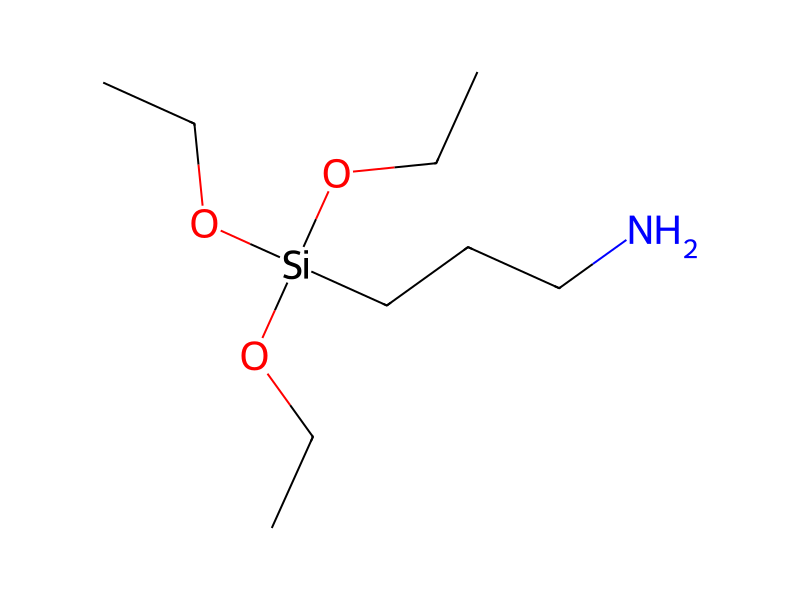
[NH2:1][CH2:2][CH2:3][CH2:4][Si](OCC)(OCC)OCC.C=[O:16].O.[C:18]1(C)C=[CH:22][CH:21]=[CH:20][CH:19]=1>>[O:16]1[C:22]2[CH:21]=[CH:20][CH:19]=[CH:18][C:4]=2[CH:3]=[CH:2][NH:1]1Participants




Procedure
A 500 mL round bottom flask was charged with 3-aminopropyltriethoxysilane (44.2 g, 200 mmol), paraformaldehyde (15.0 g, 500 mmole), siloxane bridged bisphenol (26.8 g, 100 mmole, prepared as described in Example 10A), and toluene (200 ml). A magnetic stir bar was added to the flask, which was fitted with a Dean-Stark trap and condenser. The reaction mixture was heated to reflux for 4.0 hours while stirring. A total of 7.2 ml (400 mmole) of water was collected. The reaction mixture was allowed to cool to room temperature and then passed through a thin layer of silica gel. The toluene solvent was removed by rotary evaporation and the residue remaining in the flask was sparged with nitrogen gas for four hours while the flask was maintained at 60° C. The final product was a slightly red, moderately viscous liquid. The yield of this bisbenzoxazine was 80% of theory.
Workup
- additionA magnetic stir bar was added to the flask, which
- customwas fitted with a Dean-Stark trap and condenser
- temperatureThe reaction mixture was heated
- temperatureto reflux for 4.0 hours
- customThe toluene solvent was removed by rotary evaporation
- customwas sparged with nitrogen gas for four hours while the flask
- temperaturewas maintained at 60° C
Sources & evidence
- ORD record
- ord-29a47afbac454d6b993261aeccb0e2cf
- Source dataset
- uspto-grants-2004_06
- Patent number
- US06743852B2
Reaction notes
Loading…