Bromine → 5-Bromoindoline
Reaction equation

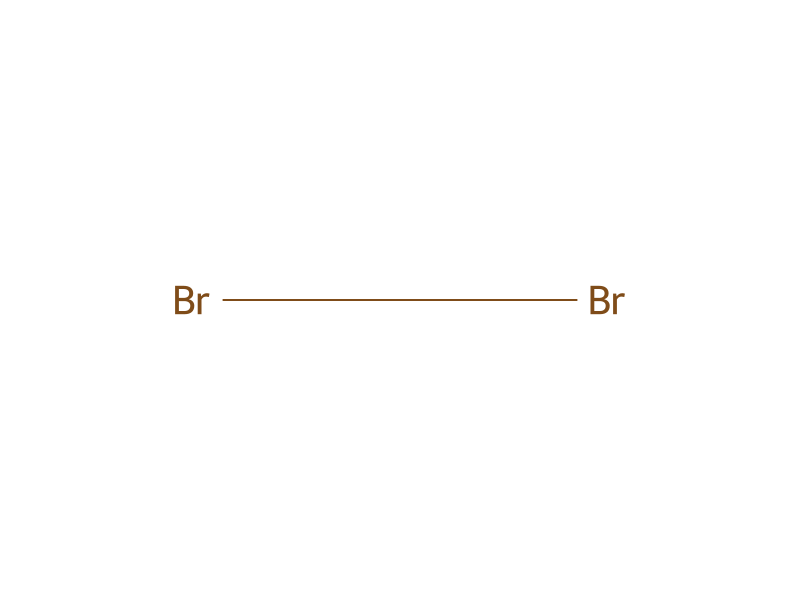
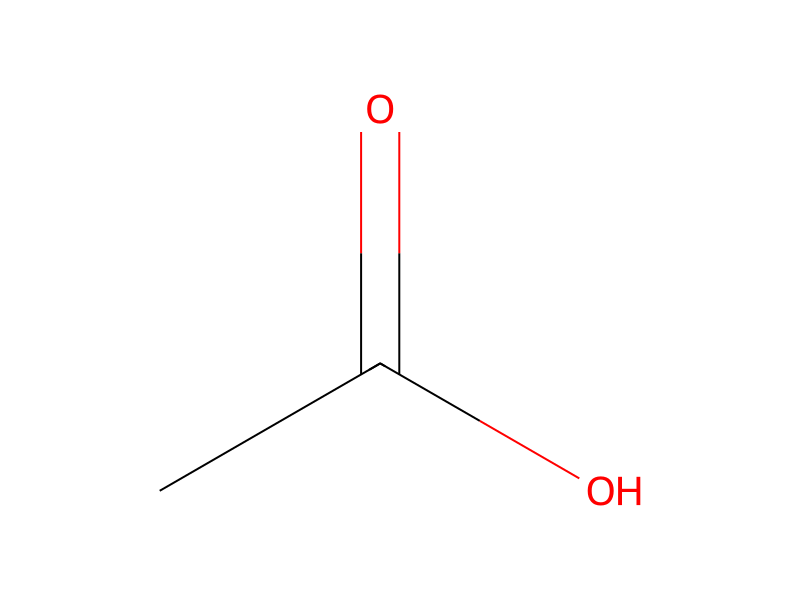
C([N:4]1[C:12]2[C:7](=[CH:8][CH:9]=[CH:10][CH:11]=2)[CH2:6][CH2:5]1)(=O)C.[Br:13]Br>C(O)(=O)C>[Br:13][C:9]1[CH:8]=[C:7]2[C:12](=[CH:11][CH:10]=1)[NH:4][CH2:5][CH2:6]2Participants
Reactant 2

Product 1

Reagents, catalysts & solvents 1
Procedure
Gall et al. [J. Org. Chem., Vol. 20 (1955), p. 1538] describes the direct bromination of 1-acetyl-indoline in glacial acetic acid with bromine followed by saponification to obtain 5-bromo-indoline in 85% yield but attempts to repeat the process with chlorine results in only about a 45% yield of 5-chloro-1-acetyl-indoline. The latter result is not surprising in view of references such as Thesing et al. [Chem. Ber., Vol. 95 (1962), p. 2205], German Pat. No. 1,123,668, British Pat. No. 919,864 and the Chemistry of Heterocyclic Compounds, Vol. 25, Indoles, part II, Wiley Interscience, New York, London, Sidney, Toronto, 1972 p. 129 which teach that the reaction of N-acetylated-indoline-2-sulfonates in glacical acetic acid with chlorine, hypochlorous acid or alkali metal hypochlorites results in a variety of chlorinated products including 5- and 7-chloro compounds. Japanese Patent Application Ser. No. P 69-27967 (1969) teaches that these difficulties may be avoided by reacting 1-acetyl-indoline with N-chlorosuccinimide in carbon tetrachloride.
Sources & evidence
- ORD record
- ord-48cef17359854ab18669cb541b5843e6
- Source dataset
- uspto-grants-1983_03
- Patent number
- US04377699
Reaction notes
Loading…