Methylhydrazine → 2-(1-Methylhydrazinyl)-5-(trifluoromethyl)pyridine
Reaction equation

Cl[C:2]1[CH:7]=[CH:6][C:5]([C:8]([F:11])([F:10])[F:9])=[CH:4][N:3]=1.[CH3:12][NH:13][NH2:14].[OH-].[Na+]>>[F:9][C:8]([F:11])([F:10])[C:5]1[CH:6]=[CH:7][C:2]([N:13]([CH3:12])[NH2:14])=[N:3][CH:4]=1Participants
4
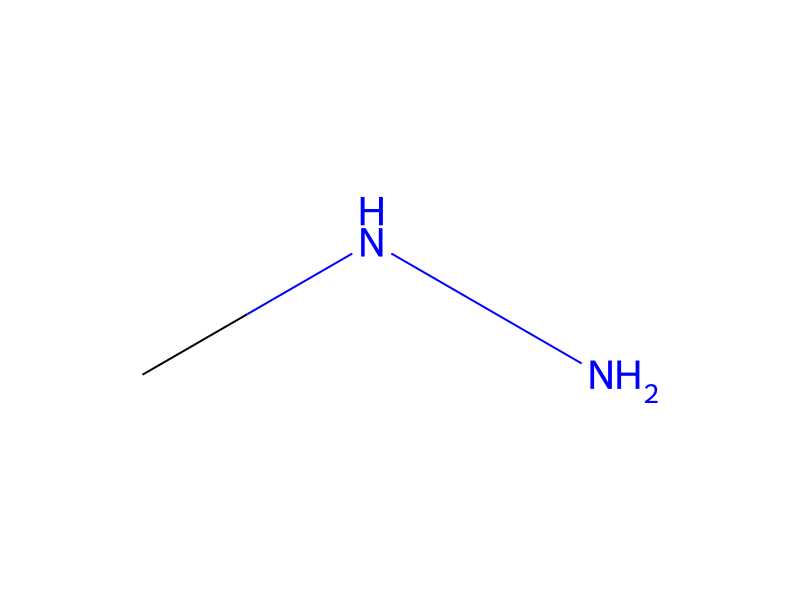



Conditions
- Temperature
- 90 °C
Procedure
2-Chloro-5-trifluoromethylpyridine (44.3 g; 0.24 mol) was treated with several portions of methyl hydrazine (33.9 g; 0.74 mol) at room temperature under nitrogen. The mixture was heated at 90° C. for 6 hr. The resulting solid was treated with 3M aqueous NaOH and extracted with ethyl acetate. The organic extracts were dried and evaporated to leave an oil/solid. Distillation of the crude product to remove excess hydrazine gave 1-[5-trifluoromethylpyrid-2-yl]-1-methyl hydrazine as a white solid (44.0 g; 94%), m.pt. 52°-55° C. ##STR14##
Workup
- extractionextracted with ethyl acetate
- customThe organic extracts were dried
- customevaporated
- customto leave an oil/solid
- distillationDistillation of the crude product
- customto remove excess hydrazine
Sources & evidence
- ORD record
- ord-2eedafe9be9a4ae888b53024aeb5ce02
- Source dataset
- uspto-grants-1998_11
- Patent number
- US05833885
Reaction notes
Loading…