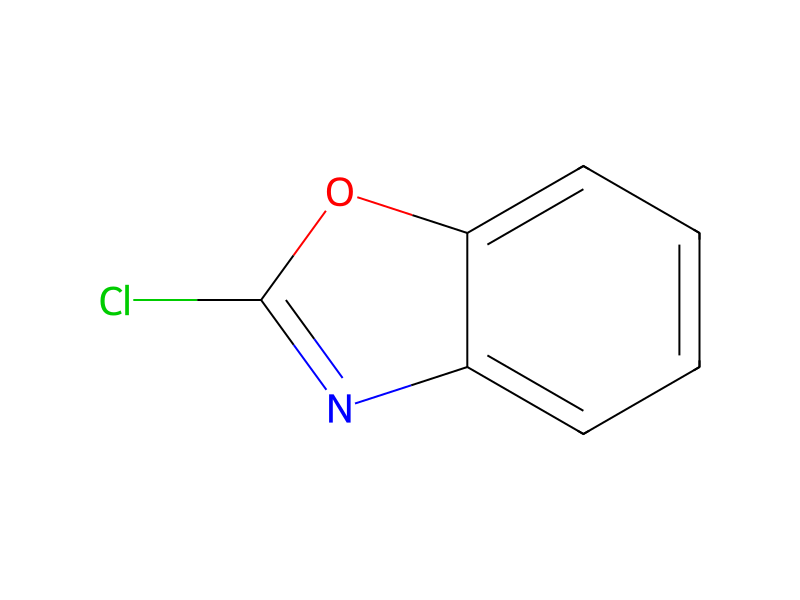
2-Chlorobenzoxazole → HCID 13090853, compound
Reaction equation

[F:1][C:2]([F:11])([F:10])[CH2:3][N:4]([CH3:9])[C:5](=[O:8])[CH2:6][OH:7].[OH-].[K+].Cl[C:15]1[O:16][C:17]2[CH:23]=[CH:22][CH:21]=[CH:20][C:18]=2[N:19]=1>C(#N)C>[F:1][C:2]([F:10])([F:11])[CH2:3][N:4]([CH3:9])[C:5](=[O:8])[CH2:6][O:7][C:15]1[O:16][C:17]2[CH:23]=[CH:22][CH:21]=[CH:20][C:18]=2[N:19]=1Participants
Reactant 3


Product 1

Reagents, catalysts & solvents 1

Conditions
- Temperature
- 20 °C
Procedure
17.1 g (0.1 mol) of N-(2,2,2-trifluoroethyl)-N-methyl-hydroxyacetic acid amide and 7 g of potassium hydroxide powder were initially introduced into 100 ml of acetonitrile at 20° C., and 15.3 g (0.1 mol) of 2-chlorobenzoxazole were added at a temperature between 20° and 40° C. The reaction mixture was stirred at 40° C. for one hour and at 20° C. for a further 15 hours and was concentrated and the concentrate was shaken with toluene and water. The organic phase was washed with dilute sodium hydroxide solution, washed until neutral, dried and filtered. The solvent was carefully distilled off from the filtrate under reduced pressure. 15 g (52% of theory) of N-(2,2,2-trifluoroethyl)-N-methyl-benzoxazol-2-yl-oxy-acetic acid amide of melting point 92° C. were obtained as the residue.
Workup
- concentrationwas concentrated
- stirringthe concentrate was shaken with toluene and water
- washThe organic phase was washed with dilute sodium hydroxide solution
- washwashed until neutral,
- customdried
- filtrationfiltered
- distillationThe solvent was carefully distilled off from the filtrate under reduced pressure
Sources & evidence
- ORD record
- ord-1a97c3c698a64f23bf2f33a17833901d
- Source dataset
- uspto-grants-1984_08
- Patent number
- US04465504
Reaction notes
Loading…