Acetone Cyanohydrin → 3,3-Dimethyl-1,2,3,4-tetrahydroquinoxalin-2-one
Reaction equation

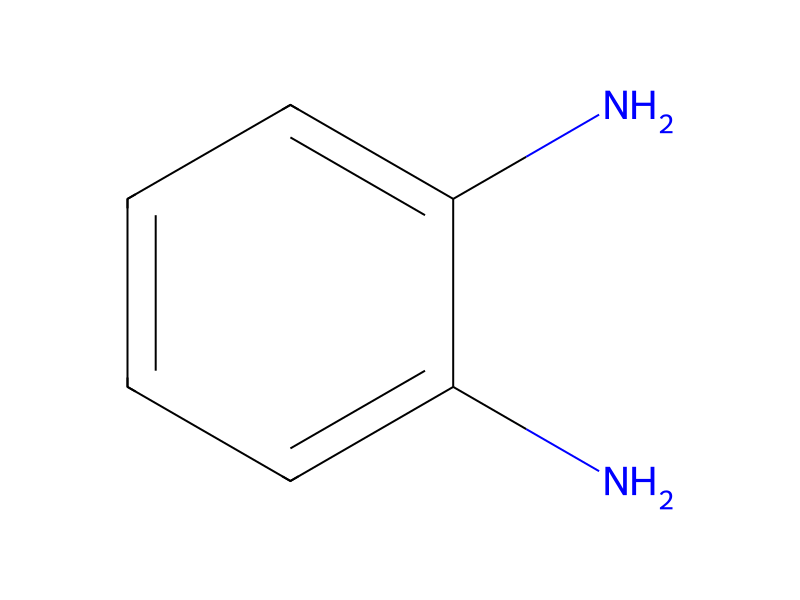
[C:1]1([NH2:8])[CH:6]=[CH:5][CH:4]=[CH:3][C:2]=1[NH2:7].[OH-:9].[Na+].[CH3:11][C:12]([CH3:16])(O)[C:13]#N>[Cl-].C([N+](CC)(CC)CC)C1C=CC=CC=1.C(Cl)(Cl)Cl>[CH3:11][C:12]1([CH3:16])[NH:8][C:1]2[C:2](=[CH:3][CH:4]=[CH:5][CH:6]=2)[NH:7][C:13]1=[O:9]Participants
6





Procedure
5.4 parts of o-phenylenediamine and 40 parts chloroform are placed in a 250 ml flask, 20 parts 50% by weight NaOH solution is added followed by 0.5 part benzyl triethyl ammonium chloride (BTAC). The flask is cooled in an ice-bath and 5.5 parts acetone cyanohydrin in 10 parts chloroform are added dropwise over 30 minutes. The flask is cooled in the ice-bath for an additional two hours, then warmed and maintained at room temperature for another two hours. Conversion in excess of 90% is obtained. The reaction product is worked up, filtered and washed with CHCl3 several times, and dried to yield 3,3-dimethyl-1,2,3,4-tetrahydroquinoxalin-2-one, which is dissolved in ethanol and conventionally hydrogenated.
Workup
- temperatureThe flask is cooled in an ice-bath
- temperaturewarmed
- customConversion in excess of 90% is obtained
- filtrationfiltered
- washwashed with CHCl3 several times
- customdried
Sources & evidence
- ORD record
- ord-a09fffa90d5344fca912605c99c5adce
- Source dataset
- uspto-grants-1984_08
- Patent number
- US04466916
Reaction notes
Loading…