Dimethylamine → 2-[2-(Dimethylamino)ethyl]-4-ethyl-2,3-dihydropyrido[3,2-f][1,4]oxazepin-5(4H)-thione
Reaction equation

Cl.Cl[CH2:3][CH2:4][CH:5]1[CH2:11][N:10]([CH2:12][CH3:13])[C:9](=[S:14])[C:8]2[CH:15]=[CH:16][CH:17]=[N:18][C:7]=2[O:6]1.[CH3:19][NH:20][CH3:21]>>[CH3:19][N:20]([CH3:21])[CH2:3][CH2:4][CH:5]1[CH2:11][N:10]([CH2:12][CH3:13])[C:9](=[S:14])[C:8]2[CH:15]=[CH:16][CH:17]=[N:18][C:7]=2[O:6]1Participants
3
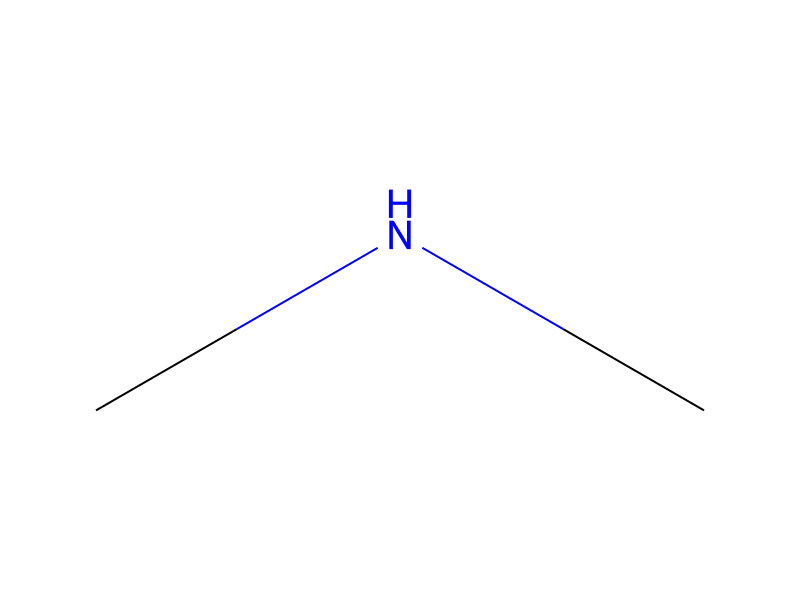


Procedure
2-(2-Chloroethyl)-4-ethyl-2,3-dihydropyrido[3,2-f][1,4]oxazepin-5(4H)-thione hydrochloride, 5.00 g (0.016 mole) was added to 20 ml of anhydrous dimethylamine. The reaction flask was sealed tightly and stirred at room temperature for 6 days. The flask was opened after cooling to 0° C. and dimethylamine allowed to evaporate at room temperature. The residue was taken up in chloroform (100 ml) and washed with dilute aqueous sodium hydroxide (1×30 ml). The chloroform layer was dried over sodium sulfate, filtered and concentrated by rotary evaporation. The residual oil was dissolved in hot cyclohexane. Upon cooling, 1.76 g (39.4%) of light yellow crystals were collected, m.p. 73° C.
Workup
- customThe reaction flask was sealed tightly
- temperatureafter cooling to 0° C.
- customto evaporate at room temperature
- washwashed with dilute aqueous sodium hydroxide (1×30 ml)
- dry with materialThe chloroform layer was dried over sodium sulfate
- filtrationfiltered
- concentrationconcentrated by rotary evaporation
- dissolutionThe residual oil was dissolved in hot cyclohexane
- temperatureUpon cooling
- custom1.76 g (39.4%) of light yellow crystals were collected
Sources & evidence
- ORD record
- ord-30a5161a9d6e454187d89cb47dfe394d
- Source dataset
- uspto-grants-1986_08
- Patent number
- US04604388
Reaction notes
Loading…