Triethylamine → 4-Heptyl-N-hydroxy-N-methylbenzamide
Reaction equation

Cl.[CH3:2][NH:3][OH:4].C(N(CC)CC)C.[CH2:12]([C:19]1[CH:27]=[CH:26][C:22]([C:23](Cl)=[O:24])=[CH:21][CH:20]=1)[CH2:13][CH2:14][CH2:15][CH2:16][CH2:17][CH3:18]>C1COCC1.O.CCOC(C)=O>[CH2:12]([C:19]1[CH:27]=[CH:26][C:22]([C:23]([N:3]([OH:4])[CH3:2])=[O:24])=[CH:21][CH:20]=1)[CH2:13][CH2:14][CH2:15][CH2:16][CH2:17][CH3:18]Participants




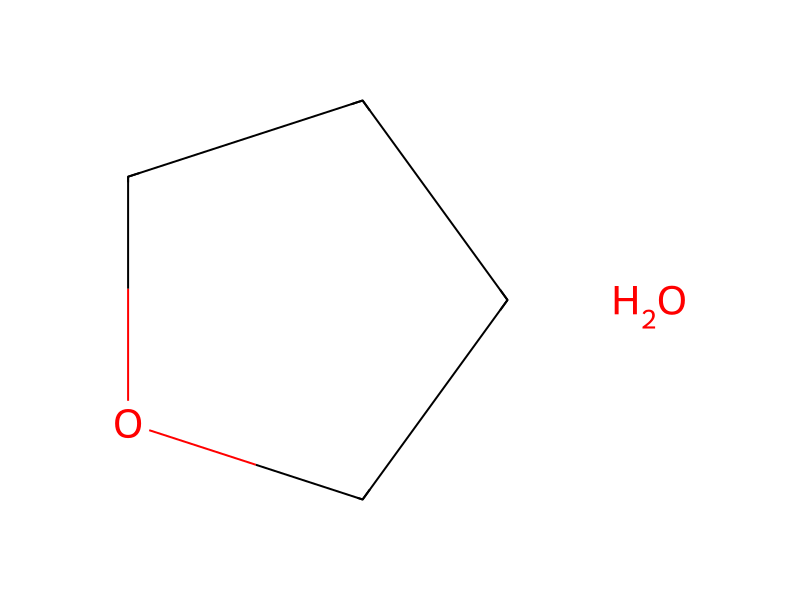
Conditions
- Temperature
- 0 °C
Procedure
To a 0° C. solution of N-methylhydroxylamine hydrochloride (701 mg, 2 eq.) in 20 ml of THF:H2O (1:1) with triethylamine (1.75 ml, 3.0 eq.) was added 4-n-heptyl benzoic acid chloride (1.0 g, 4.2 mmol). The solution was stirred for 1/2 hour at 0° C. then allowed to warm to room temperature and stir overnight. The reaction mixture was diluted with EtOAc and the organic layer washed with H2O, 1N HCl (2×), and brine, then dried over anhydrous MgSO4. Concentration in vacuo gave an oil which was flash chromatographed on LPS-1 silica gel eluting with (1:1) hexane:EtOAc. Product containing fractions were concentrated in vacuo to yield title product, 448 mg (43%) as a light yellow oil which solidified upon standing. TLC (1:1) Hexane:EtOAc Rf =0.18, UV+PMA. Product streaks to baseline.
Workup
- temperatureto warm to room temperature
- stirringstir overnight
- washthe organic layer washed with H2O, 1N HCl (2×), and brine
- dry with materialdried over anhydrous MgSO4
- concentrationConcentration in vacuo
- customgave an oil which
- customchromatographed on LPS-1 silica gel eluting with (1:1) hexane
- additionProduct containing fractions
- concentrationwere concentrated in vacuo
Sources & evidence
- ORD record
- ord-70e2912fc069405c83e747dff2cf2c9e
- Source dataset
- uspto-grants-1986_08
- Patent number
- US04607053
Reaction notes
Loading…