Methanol → 2-(1,3-benzodioxol-5-yl)-2-(5-bromo-1-methyl-1H-3-indolyl)acetic acid
Reaction equation
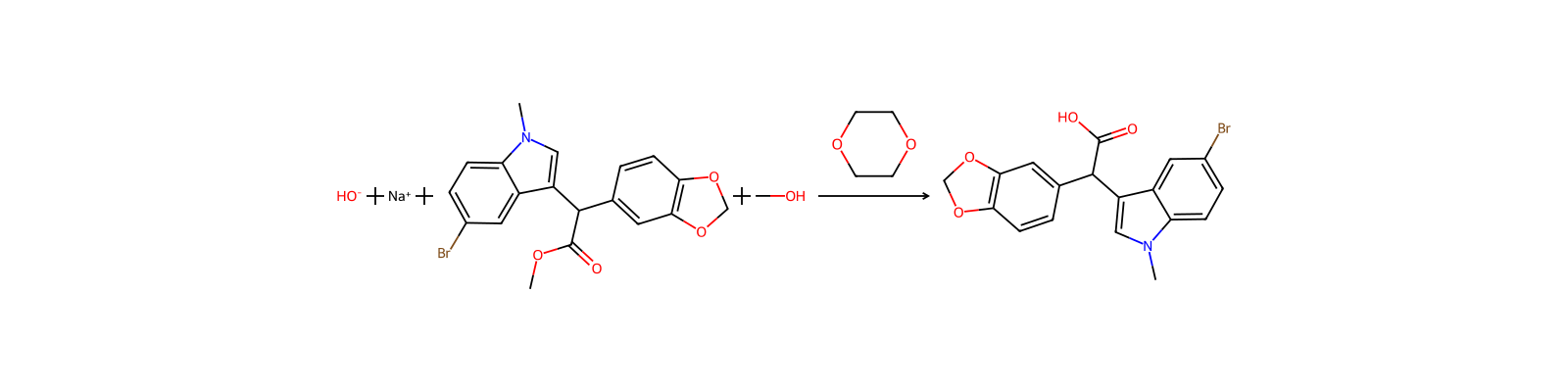
[OH-].[Na+].[O:3]1[C:7]2[CH:8]=[CH:9][C:10]([CH:12]([C:17]3[C:25]4[C:20](=[CH:21][CH:22]=[C:23]([Br:26])[CH:24]=4)[N:19]([CH3:27])[CH:18]=3)[C:13]([O:15]C)=[O:14])=[CH:11][C:6]=2[O:5][CH2:4]1.CO>O1CCOCC1>[O:3]1[C:7]2[CH:8]=[CH:9][C:10]([CH:12]([C:17]3[C:25]4[C:20](=[CH:21][CH:22]=[C:23]([Br:26])[CH:24]=4)[N:19]([CH3:27])[CH:18]=3)[C:13]([OH:15])=[O:14])=[CH:11][C:6]=2[O:5][CH2:4]1Participants
5





Procedure
Aqueous sodium hydroxide (14.7 ml of 1M) was added to a solution of methyl 2-(1,3-benzodioxol-5-yl)-2-(5-bromo-1-methyl-1H-3-indolyl)acetate from (b) (1.97 g, 4.9 mmol) in a 3:1 mixture of methanol and 1,4-dioxane at ambient temperature. The mixture was heated to reflux for 1 hour before recooling and removing the organic solvents in vacuo. The residue was redissolved in water and acidified with drops of concentrated hydrochloric acid. The resultant precipitate was extracted with diethylether, dried (magnesium sulphate) and the solvent removed in vacuo. The residue was crystallised from diisopropylether to give the subtitle compound (1.59 g).
Workup
- temperatureThe mixture was heated
- temperatureto reflux for 1 hour before recooling
- customremoving the organic solvents in vacuo
- dissolutionThe residue was redissolved in water
- extractionThe resultant precipitate was extracted with diethylether
- dry with materialdried (magnesium sulphate)
- customthe solvent removed in vacuo
- customThe residue was crystallised from diisopropylether
Sources & evidence
- ORD record
- ord-e9b946133e794c908752cda276e2a632
- Source dataset
- uspto-grants-2000_10
- Patent number
- US06136843
Reaction notes
Loading…