Toluene → 1-(4-Aminobenzoyl)azepan-2-one
Reaction equation

[C:1]1(=[O:8])[NH:7][CH2:6][CH2:5][CH2:4][CH2:3][CH2:2]1.C1(C)C=CC=CC=1.S(=[N:18][C:19]1[CH:27]=[CH:26][C:22]([C:23](Cl)=[O:24])=[CH:21][CH:20]=1)=O>N1C=CC=CC=1>[NH2:18][C:19]1[CH:27]=[CH:26][C:22]([C:23]([N:7]2[CH2:6][CH2:5][CH2:4][CH2:3][CH2:2][C:1]2=[O:8])=[O:24])=[CH:21][CH:20]=1Participants
5
Reactant 3

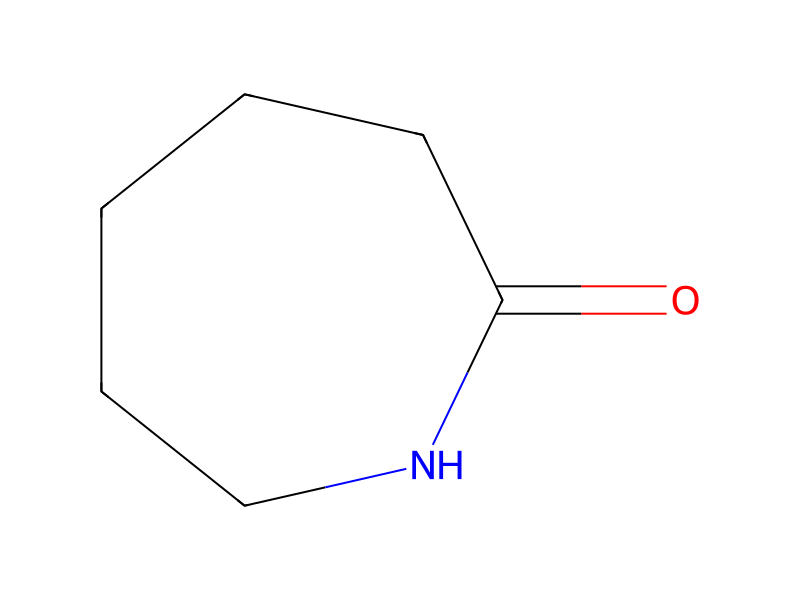

Product 1

Reagents, catalysts & solvents 1

Procedure
Into a 3000 mL three-neck reactor were charged caprolactam (150 g, 0.703 mol), toluene (1300 mL), and pyridine (680 mL); the reactor was then purged with nitrogen. Under ice bath, p-sulfinylaminobenzoyl chloride (147.1 g, 0.730 mol) was added with stirring to the above mixture. After removing the ice-bath, the reaction mixture was stirred at room temperature for 14 hours. After this, pyridine chloride was removed by filtration and the filtrate was washed with 5% sodium bicarbonate solution two times, and then concentrated to remove the solvent. The residue was recrystallized from ethyl acetate to give N-(p-aminobenzoyl)caprolactam, a polymerizable lactam monomer.
Workup
- customthe reactor was then purged with nitrogen
- customAfter removing the ice-bath
- stirringthe reaction mixture was stirred at room temperature for 14 hours
- customAfter this, pyridine chloride was removed by filtration
- washthe filtrate was washed with 5% sodium bicarbonate solution two times
- concentrationconcentrated
- customto remove the solvent
- customThe residue was recrystallized from ethyl acetate
Sources & evidence
- ORD record
- ord-79558ddbc7d841e0bbd086cf6ee67dd9
- Source dataset
- uspto-grants-2000_10
- Patent number
- US06136908
Reaction notes
Loading…