Chloroform → 8-Fluoro-10,11-dihydro-2-methyl-dibenzo[b,f]-thiepin-10-ol
Reaction equation

[F:1][C:2]1[CH:3]=[CH:4][C:5]2[S:11][C:10]3[CH:12]=[CH:13][C:14]([CH3:16])=[CH:15][C:9]=3[CH2:8][C@@H:7](N3CCN(CCN4CCOC4=O)CC3)[C:6]=2[CH:31]=1.C(Cl)(Cl)Cl.CS(O)(=O)=[O:38]>C1C=CC=CC=1>[F:1][C:2]1[CH:3]=[CH:4][C:5]2[S:11][C:10]3[CH:12]=[CH:13][C:14]([CH3:16])=[CH:15][C:9]=3[CH2:8][CH:7]([OH:38])[C:6]=2[CH:31]=1Participants
Reactant 3

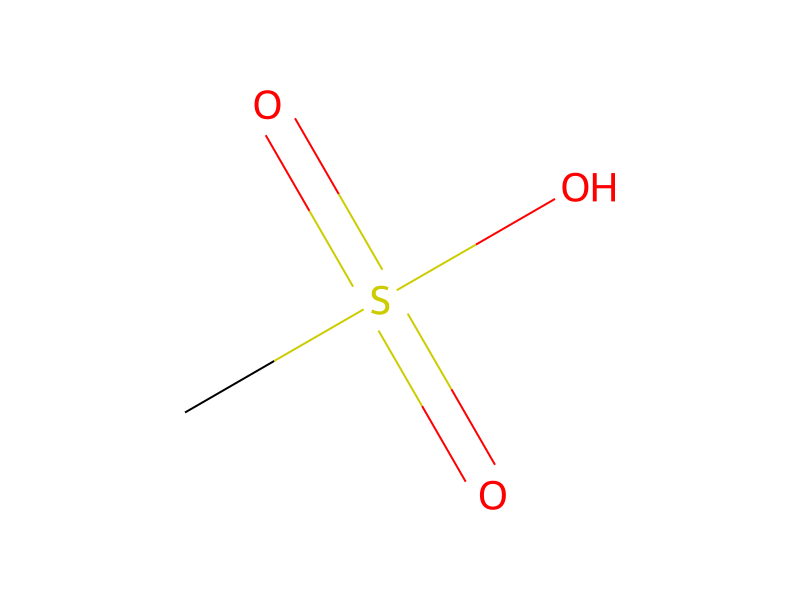

Product 1

Reagents, catalysts & solvents 1

Procedure
5.0 G. of enriched (-)-(R)-3-{2-[4-(8-fluoro-10,11-dihydro-2-methyl-dibenzo[b,f]thiepin-10-yl)-1-piperazinyl]ethyl}-2-oxazolidinone αD20 = -9.5°; α365 = +125.0° (chloroform; c = 2.50%)] are heated under reflux for 18 hours with stirring in 81 ml. of 0.5-M methanesulfonic acid and the mixture is subsequently treated with benzene. The organic phase is washed with water, dried over sodium sulfate and evaporated. The residue is crystallized from n-hexane, and there is obtained racemic 8-fluoro-10,11-dihydro-2-methyl-dibenzo[b,f]thiepin-10-ol having a melting point of 89.5°-90° C. The yield is 97%. This compound can be converted in accordance with the procedure described in Example 1 into the 10-chloro compound which can subsequently be used in Example 1 or 11.
Workup
- temperatureunder reflux for 18 hours
- washThe organic phase is washed with water
- dry with materialdried over sodium sulfate
- customevaporated
- customThe residue is crystallized from n-hexane
Sources & evidence
- ORD record
- ord-ccd105e6af9c45e69f09d69770d6bd4f
- Source dataset
- uspto-grants-1978_05
- Patent number
- US04089861
Reaction notes
Loading…