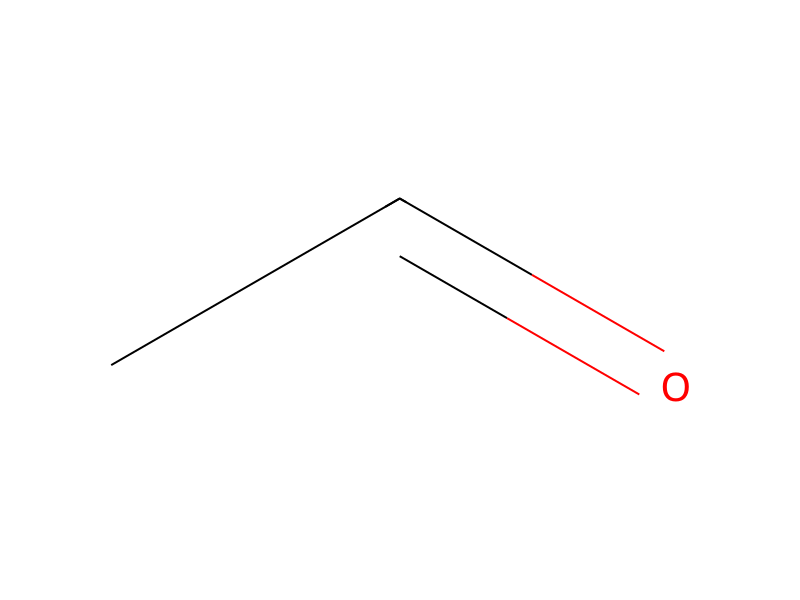
Acetaldehyde → 1-(1-Hydroxyethyl)phenoxathiin 10,10-dioxide
Reaction equation

[Li][C:2]1[C:15]2[S:14](=[O:17])(=[O:16])[C:13]3[C:8](=[CH:9][CH:10]=[CH:11][CH:12]=3)[O:7][C:6]=2[CH:5]=[CH:4][CH:3]=1.C1C2S(=O)(=O)C3C(=CC=CC=3)[O:23][C:22]=2[CH:21]=CC=1.C(=O)C>>[OH:23][CH:22]([C:2]1[C:15]2[S:14](=[O:17])(=[O:16])[C:13]3[C:8](=[CH:9][CH:10]=[CH:11][CH:12]=3)[O:7][C:6]=2[CH:5]=[CH:4][CH:3]=1)[CH3:21]Participants


Conditions
- Temperature
- -50 °C
Procedure
To a batch of 1-lithiophenoxathiin 10,10-dioxide, prepared according to the procedure of Example 1B from 44 g of phenoxathiin 10,10-dioxide chilled to ≤-50° C. in a dry ice/acetone bath, was slowly added chilled acetaldehyde (20.37 g). The reaction mixture was maintained at -50° C. during the addition which took 45 min. It was then allowed to warm to room temperature, and the solvent was removed under reduced pressure. The yellow-orange residue was stirred overnight with 0.5 N hydrochloric acid (259 mL), filtered and washed with water (500 mL). It was then washed throughly with ethanol (1.5 L), filtered and dried to give 1-(1-hydroxyethyl) phenoxathiin 10,10-dioxide (41 g) which was sufficiently pure for the next step (conversion to 1-ethylphenoxathiin 10,10-dioxide).
Workup
- temperaturechilled to ≤-50° C. in a dry ice/acetone bath
- additionwas slowly added
- temperatureto warm to room temperature
- customthe solvent was removed under reduced pressure
- filtrationfiltered
- washwashed with water (500 mL)
- washIt was then washed throughly with ethanol (1.5 L)
- filtrationfiltered
- customdried
Sources & evidence
- ORD record
- ord-3205d55d0545420eb710b79417a1f784
- Source dataset
- uspto-grants-1995_05
- Patent number
- US05420156
Reaction notes
Loading…