5-Chloro-2-pyridinol → HCID 20326567, compound
Reaction equation

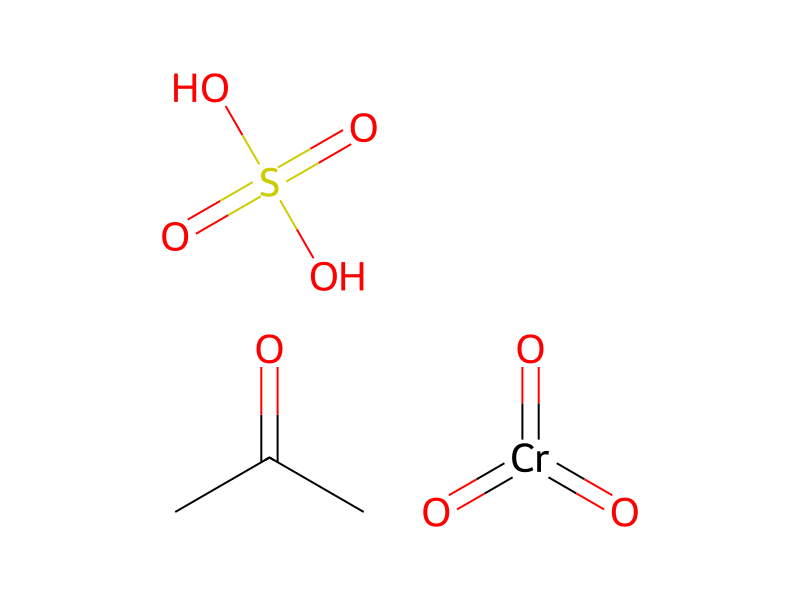
CC(C)=O.OS(O)(=O)=O.O=[Cr](=O)=O.[Cl:14][CH2:15][C:16](=[O:19])[CH2:17]I.[Cl:20][C:21]1[CH:22]=[CH:23][C:24](=[O:27])[NH:25][CH:26]=1>>[Cl:14][CH2:15][C:16](=[O:19])[CH2:17][O:27][C:24]1[CH:23]=[CH:22][C:21]([Cl:20])=[CH:26][N:25]=1Participants
4



Procedure
A protected ketone derivative wherein R2 is a 5-chloro-2-pyridyl radical, for use as a starting material in the process of the invention, may be obtained by reacting epichlorhydrin with hydriodic acid and sodium iodide to give 1-chloro-3-iodopropan-2-ol, which is oxidised by Jones' reagent to the ketone, 1-chloro-3-iodopropan-2-one. The ketone is reacted with 5-chloropyrid-2-one to give 1-chloro-3-(5-chloropyrid-2-yloxy)propan-2-one, which is converted to the protected ketone derivative, ClCH2.CR3.CH2OR2 wherein R2 is a 5-chloro-2-pyridyl radical, which in turn is reacted with a trialkyl phosphite to give the required protected ketone starting material, (R1O)2.PO.CH2.CR3.CH2OR2.
Sources & evidence
- ORD record
- ord-677aed134c994e4b988f220333cf9a4c
- Source dataset
- uspto-grants-1978_05
- Patent number
- US04092323
Reaction notes
Loading…