1,2-Dibromoethane → 2,3-Dihydro-1,4-benzodioxine-5-carbaldehyde
Reaction equation

[OH:1][C:2]1[C:9]([OH:10])=[CH:8][CH:7]=[CH:6][C:3]=1[CH:4]=[O:5].Br[CH2:12][CH2:13]Br.C(=O)([O-])[O-].[K+].[K+]>CN(C=O)C.C1C=CC=CC=1>[CH2:12]1[CH2:13][O:10][C:9]2[C:2](=[C:3]([CH:6]=[CH:7][CH:8]=2)[CH:4]=[O:5])[O:1]1Participants

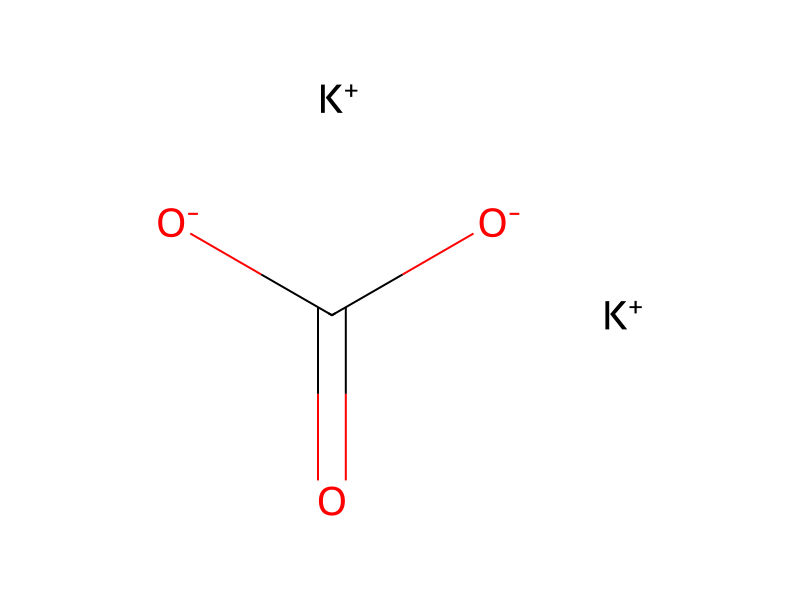


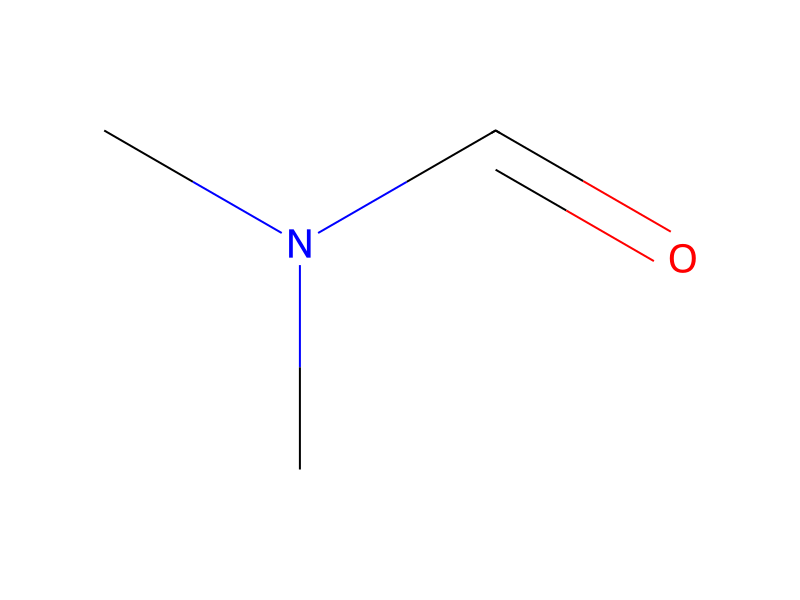
Conditions
- Temperature
- 135 °C
Procedure
12.04 g of 2,3-dihydroxybenzaldehyde was dissolved in 120 ml of dry DMF. To this solution, 9.0 ml of 1.2-dibromoethane, 12.1 g of anhydrous potassium carbonate and 1.1 g of cupric oxide were added. The reaction solution was refluxed under heating for three hours on a hot water bath at 135° C. The reaction solution was diluted with 700 ml of benzene and then washed with 500 ml of water. The aqueous layer was separated and extracted with benzene (500 ml×2 times). The extracted organic layers were combined to the previously separated organic layer, the combined organic layer was dried over anhydrous magnesium sulfate. The inorganic salt was removed by filtration, and the reaction solution was concentrated under reduced pressure to obtain a brown syrup. This syrup was purified by silica gel column chromatography (n-hexane/acetone=5/1). The eluted solution was concentrated under reduced pressure, and the residue was recrystallized from n-hexane/acetone to obtain 7.0 g of the above identified compound as white crystals (melting point: 63°-64° C.) (yield: 49%). The mother solution was concentrated and dried to obtain 3.2 g of the above identified compound as crude syrup (yield: 22%).
Workup
- temperatureThe reaction solution was refluxed
- washwashed with 500 ml of water
- customThe aqueous layer was separated
- extractionextracted with benzene (500 ml×2 times)
- dry with materialthe combined organic layer was dried over anhydrous magnesium sulfate
- customThe inorganic salt was removed by filtration
- concentrationthe reaction solution was concentrated under reduced pressure
- customto obtain a brown syrup
- customThis syrup was purified by silica gel column chromatography (n-hexane/acetone=5/1)
- concentrationThe eluted solution was concentrated under reduced pressure
- customthe residue was recrystallized from n-hexane/acetone
- customto obtain 7.0 g of the
Sources & evidence
- ORD record
- ord-ba6a63858a6741249c5cece8902ad1ce
- Source dataset
- uspto-grants-1996_01
- Patent number
- US05481036
Reaction notes
Loading…