Water → HCID 10739321, compound
Reaction equation

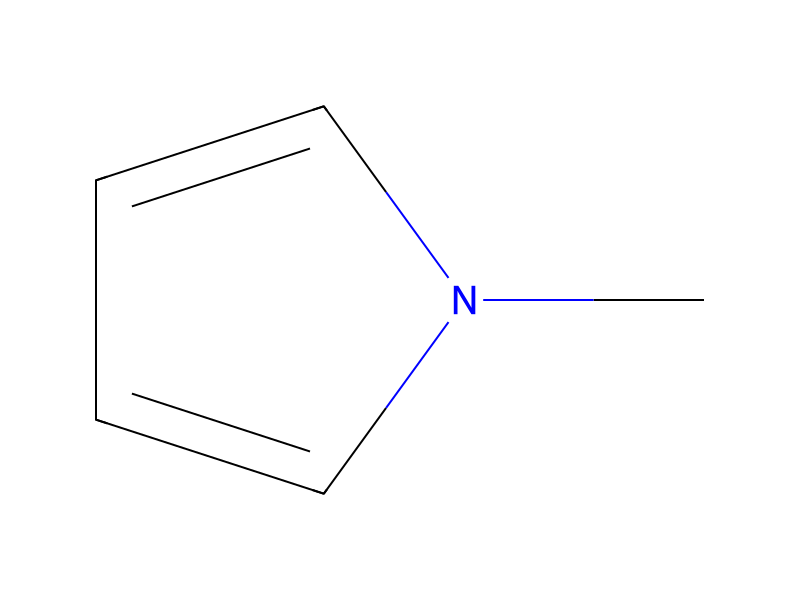
[C:1]1(=[O:12])[C:10]2[C:5](=[CH:6][CH:7]=[CH:8][CH:9]=2)[C:4](=[O:11])[CH:3]=[CH:2]1.[CH3:13][N:14]1[CH:18]=[CH:17][CH:16]=[CH:15]1.[OH2:19]>C(O)(=O)C.ClCCl>[CH3:13][N:14]1[C:18]([C:3]2[C:4](=[O:11])[C:5]3[C:10]([C:1](=[O:12])[CH:2]=2)=[CH:9][CH:8]=[CH:7][CH:6]=3)=[CH:17][CH:16]=[C:15]1[C:3]1[C:4](=[O:11])[C:5]2[C:10]([C:1](=[O:19])[CH:2]=1)=[CH:9][CH:8]=[CH:7][CH:6]=2Participants
Reactant 3


Product 1

Reagents, catalysts & solvents 2


Procedure
The procedure described in the article Chemistry Express 1990, Vol. 5, No. 10, pages 749-752, the disclosure of which is specifically incorporated by reference herein, was followed, by stirring 10 millimol of 1,4-naphthoquinone with 2.5 millimol of N-methylpyrrole in 40 ml of acetic acid at 50° C. for 5 hours. The reaction mixture was diluted with 300 ml of dichloromethane and the resulting mixture was then poured into a large volume of water (300 ml). The organic phase was then separated out and washed four times with 100 ml of water and finally with saturated aqueous NaCl solution. The resulting organic phase was dried over Na2SO4 and then concentrated under vacuum. The 1-methyl-2,5-bis(1,4-naphthoquinon-2-yl)pyrrole was thus obtained in a yield of 90%.
Workup
- customThe organic phase was then separated out and
- washwashed four times with 100 ml of water
- dry with materialThe resulting organic phase was dried over Na2SO4
- concentrationconcentrated under vacuum
Sources & evidence
- ORD record
- ord-ebd3046bfcb04bb2ab5dc7737b10bde0
- Source dataset
- uspto-grants-2000_02
- Patent number
- US06022379
Reaction notes
Loading…