Ethylenediamine → N-(1-methyl-4-pyrazolylmethyl)trimethylenediamine
Reaction equation

[CH3:1][N:2]1[CH:6]=[C:5]([CH:7]=O)[CH:4]=[N:3]1.[CH2:9]([NH2:12])[CH2:10]N.[C:13](#[N:15])C>>[CH3:1][N:2]1[CH:6]=[C:5]([CH2:7][NH:15][CH2:13][CH2:10][CH2:9][NH2:12])[CH:4]=[N:3]1Participants
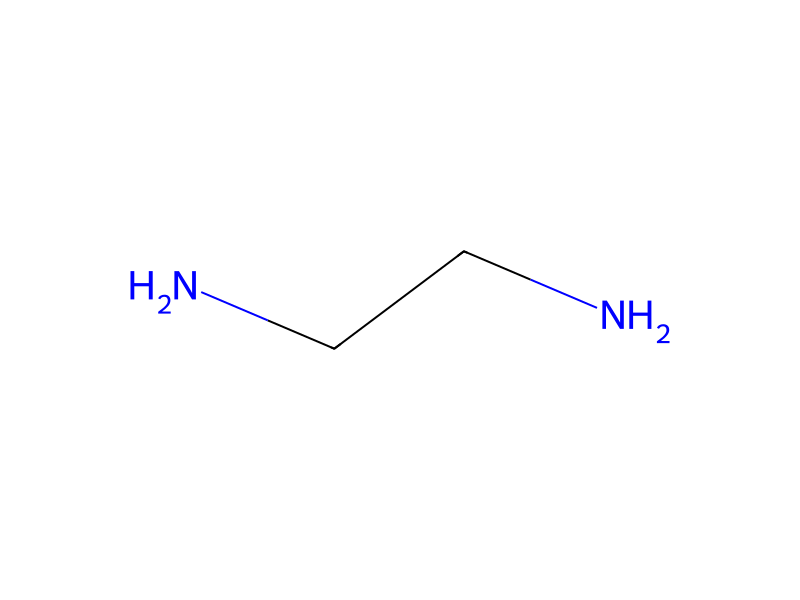



Procedure
At room temperature 11 g of 1-methyl-4-pyrazole carbaldehyde was slowly added to 37 g of ethylenediamine in 150 ml of dry acetonitrile. Molecular sieves 4A (a product of Wako Pure Chemicals, Co.) were added as a dehydrating agent to the solution. The mixture was stirred at room temperature for 2 hours, and filtered. Acetonitrile was distilled off under reduced pressure from the filtrate. To the residue was added 100 ml of ethanol, and then 4 g of sodium borohydride was added little by little at room temperature. The mixture was then stirred at room temperature for 2 hours, and ethanol was distilled off under reduced pressure. Water was added to the residue, and the mixture was extracted with dichloromethane. The solvent was distilled off from the: dichloromethane layer, and the residue was vacuum-distilled to give 10 g of N-(1-methyl-4-pyrazolylmethyl)trimethylenediamine as a colorless oil.
Workup
- addition) were added as a dehydrating agent to the solution
- filtrationfiltered
- distillationAcetonitrile was distilled off under reduced pressure from the filtrate
- additionTo the residue was added 100 ml of ethanol
- addition4 g of sodium borohydride was added little by little at room temperature
- stirringThe mixture was then stirred at room temperature for 2 hours
- distillationethanol was distilled off under reduced pressure
- additionWater was added to the residue
- extractionthe mixture was extracted with dichloromethane
- distillationThe solvent was distilled off from the: dichloromethane layer
- distillationthe residue was vacuum-distilled
Sources & evidence
- ORD record
- ord-5ada97ac01c144658825792425cf8b69
- Source dataset
- uspto-grants-2000_02
- Patent number
- US06022967
Reaction notes
Loading…