Tetralin → 5,6,7,8-Tetrahydro-1-naphthol
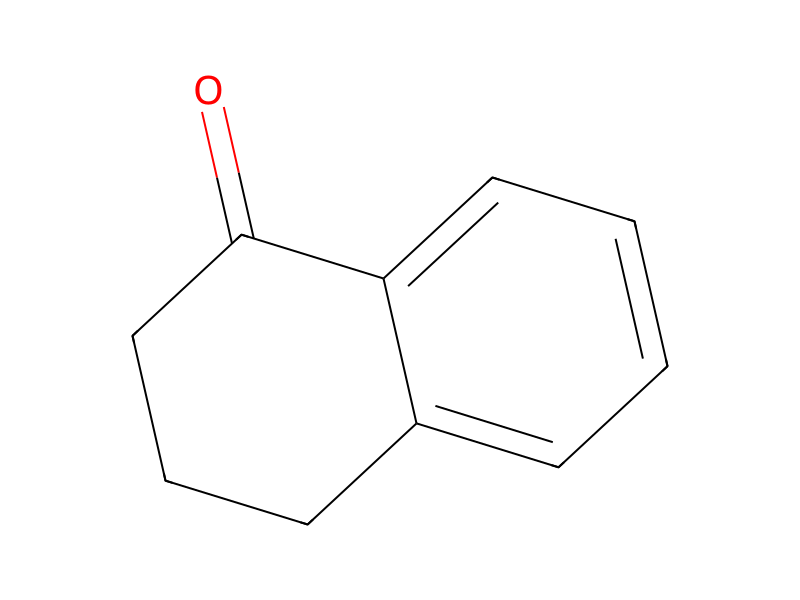
Reaction equation

[CH2:1]1[C:10]2[C:5](=[CH:6][CH:7]=[CH:8][CH:9]=2)[CH2:4][CH2:3][CH2:2]1.[OH:11]N1C2C=CC=CC=2N=N1>CC(C)=O>[C:9]1(=[O:11])[C:10]2[C:5](=[CH:4][CH:3]=[CH:2][CH:1]=2)[CH2:6][CH2:7][CH2:8]1.[OH:11][C:6]1[CH:7]=[CH:8][CH:9]=[C:10]2[C:5]=1[CH2:4][CH2:3][CH2:2][CH2:1]2Participants
5
Reactant 2


Product 2

Reagents, catalysts & solvents 1

Procedure
212 mg (1.60 mmol) of 1,2,3,4-tetrahydronaphthalene in 1.1 ml of acetone were reacted analogously to Example 1 with 71 mg (0.53 mmol) of 1-hydroxy-1H-benzotriazole in 3 ml of acetone and 15 ml of an aqueous solution of 2 mg/ml laccase from Trametes versicolor. After a reaction time of 24 hours, the reaction solution was extracted with chloroform and examined by NMR spectroscopy. Yield 42% of 1-tetralone and 6% of 5-hydroxytetralin (approx. 90% yield of 1-tetralone based on conversion).
Workup
- extractionAfter a reaction time of 24 hours, the reaction solution was extracted with chloroform
Sources & evidence
- ORD record
- ord-106cb9f474bb4f7a9a043dbb8fb07cd8
- Source dataset
- uspto-grants-2000_02
- Patent number
- US06023000
Reaction notes
Loading…