3-Nitrosalicylic acid → 3-Aminosalicylamide
Reaction equation

OC1C([N+]([O-])=O)=CC=CC=1C(O)=O.S(Cl)(Cl)=O.[N+:18]([C:21]1[CH:29]=[CH:28][CH:27]=[C:23]([C:24]([NH2:26])=[O:25])[C:22]=1[OH:30])([O-])=O.[S]>CN(C)C1C=CN=CC=1.[Ni].[Pd].C(N(CC)CC)C>[NH2:18][C:21]1[CH:29]=[CH:28][CH:27]=[C:23]([C:24]([NH2:26])=[O:25])[C:22]=1[OH:30]Participants
Reactant 4



Product 1

Reagents, catalysts & solvents 4
Procedure
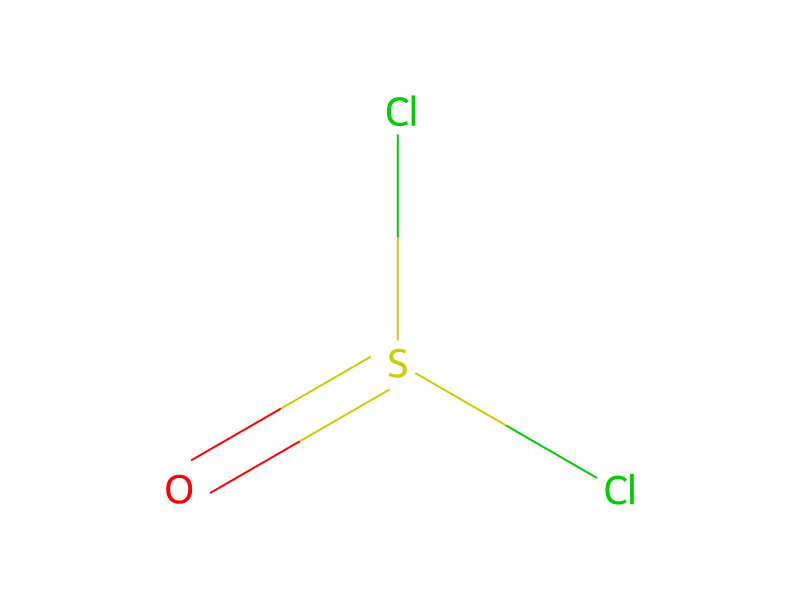
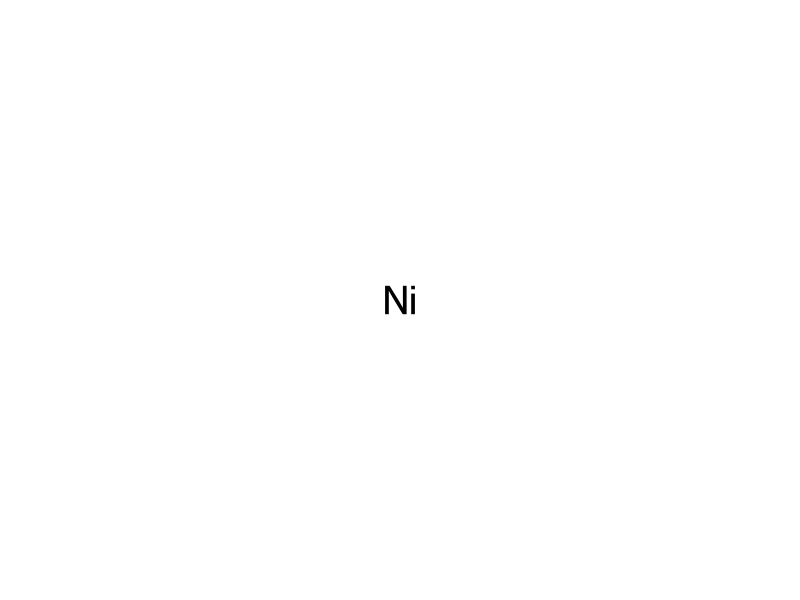
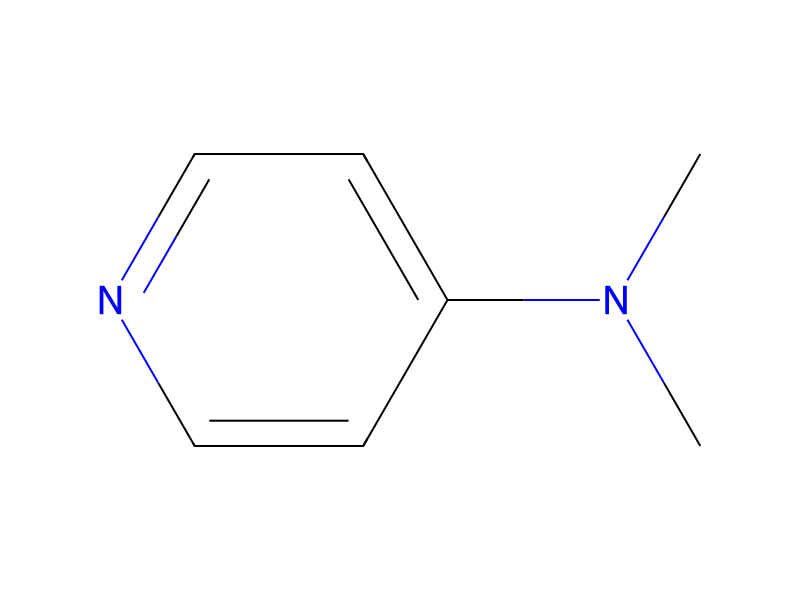
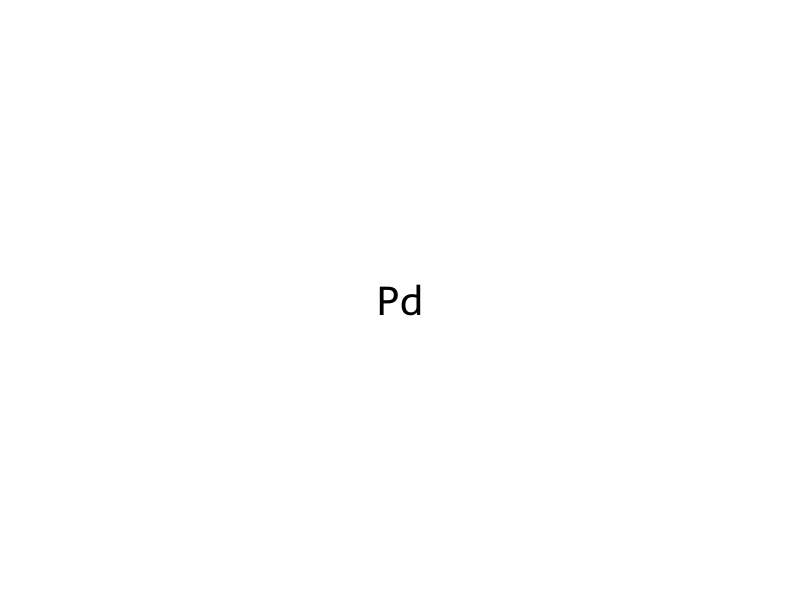
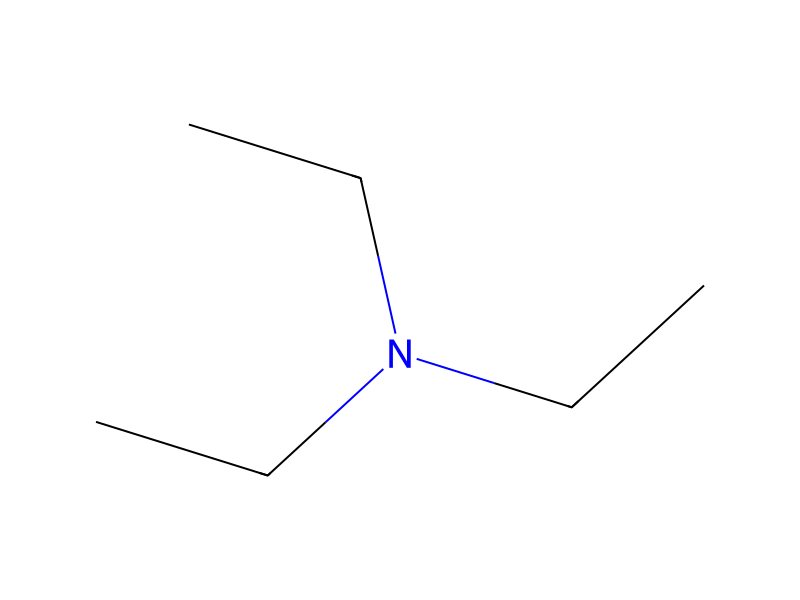
A preferred synthesis of the desired product acylated aminosalicylamides (Formula I) is shown in the following Scheme 1. 2-Hydroxy-3-nitrobenzoic acid 1 was converted to the acid chloride 2 with excess thionyl chloride. After removal of the excess thionyl chloride, the crude acid chloride 2 was reacted with the desired cyclic amine 3 in dichloromethane solution containing triethylamine as an acid scavenger and 4-dimethylaminopyridine (DMAP) as a catalyst. Crude 3-nitrosalicylamide 4 could be isolated after washing the reaction mixture with dilute HCl solution, drying, and evaporation of the solvent. Usually 4 was of sufficient purity to carry forward to the final product 6, but if desired could be purified by recrystallization or chromatography or a combination of both. In some cases where the 3-nitrosalicylamide 4 is a mixture of diastereomers, one might choose to isolate the individual diastereomers at this stage. However, since all of the various diastereomers are fuigicidally active, this is not necessary. The 3-nitrosalicylamide (4) was subsequently reduced under catalytic hydrogenation conditions using Pd, Pt, or Ni catalysts either unpoisoned or poisoned with sulfur or lead. The 3-aminosalicylamide 5 usually was not isolated, but immediately reacted with excess acetic-formic anhydride. Isolation of the AASA product 6 was a simple matter of filtration, washing with sodium bicarbonate solution, drying and evaporation of the solvent The crude product 6, usually a solid foam or glass, often was of sufficient purity to be directly submitted for testing. However, if desired, it could be further purified by recrystallization or chromatography or a combination of both.
Workup
- customAfter removal of the excess thionyl chloride
- customthe crude acid chloride 2 was reacted with the desired cyclic amine 3 in dichloromethane solution
- customCrude 3-nitrosalicylamide 4 could be isolated
- washafter washing the reaction mixture with dilute HCl solution
- customdrying
- customevaporation of the solvent
- customif desired could be purified by recrystallization or chromatography
- additiona mixture of diastereomers, one
- customto isolate the individual diastereomers at this stage
Sources & evidence
- ORD record
- ord-97bbca9c62ef4e11a7eb3d947be86904
- Source dataset
- uspto-grants-2001_10
- Patent number
- US06297401B1
Reaction notes
Loading…