Pyridine → 2-Propenoic acid, 3-phenyl-, 2,4-dinitrophenyl ester
Reaction equation

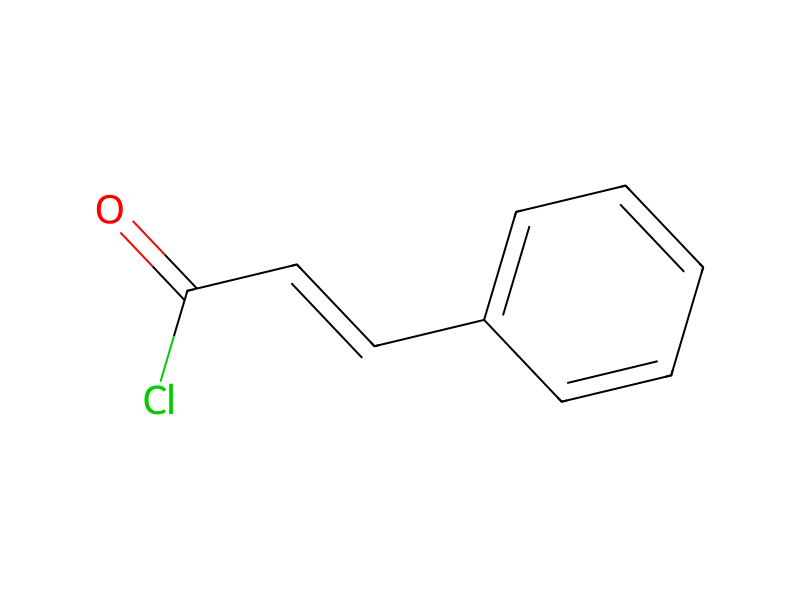
[C:1](Cl)(=[O:10])[CH:2]=[CH:3][C:4]1[CH:9]=[CH:8][CH:7]=[CH:6][CH:5]=1.[N+:12]([C:15]1[CH:20]=[C:19]([N+:21]([O-:23])=[O:22])[CH:18]=[CH:17][C:16]=1[OH:24])([O-:14])=[O:13].N1C=CC=CC=1>CC(C)=O>[C:1]([O:24][C:16]1[CH:17]=[CH:18][C:19]([N+:21]([O-:23])=[O:22])=[CH:20][C:15]=1[N+:12]([O-:14])=[O:13])(=[O:10])[CH:2]=[CH:3][C:4]1[CH:9]=[CH:8][CH:7]=[CH:6][CH:5]=1Participants
5
Reactant 3


Product 1

Reagents, catalysts & solvents 1

Conditions
- Temperature
- 60 °C
Procedure
66.64 g (0.4 mole) of cinnamoyl chloride and 300 g of methyl ketone (hereinafter referred to as MEK) were placed in a reaction vessel to be stirred by heating at 60° C. under a nitrogen current. 73.64 g (0.4 mole) of 2,4-dinitrophenol, 50 g of pyridine, and 500 g of MEK were added dropwise to the above reaction vessel using a dropping funnel. After that, reflux stirring was conducted for approximately 20 hours under a nitrogen current. After the completion of the reaction, the precipitate was separated by filtration. The filtrate was concentrated until crystals separated out and poured into methanol. 90 g of light yellow colored needle-like crystals (2,4-dinitrophenyl cinnamate) were yielded.
Workup
- customwere placed in a reaction vessel
- temperatureAfter that, reflux
- stirringstirring
- customAfter the completion of the reaction
- customthe precipitate was separated by filtration
- concentrationThe filtrate was concentrated until crystals
- customseparated out and
- additionpoured into methanol
Sources & evidence
- ORD record
- ord-e44e1239dfd44606a773c7339484058a
- Source dataset
- uspto-grants-2001_10
- Patent number
- US06303742B1
Reaction notes
Loading…