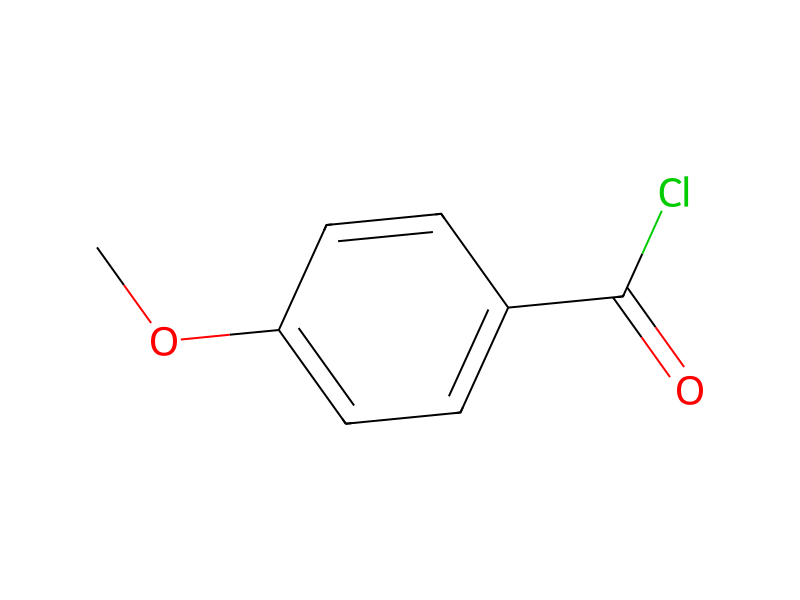
p-Anisoyl chloride → HCID 21893450, compound
Reaction equation

[NH2:1][CH2:2][CH2:3][C:4]1[CH:9]=[CH:8][C:7]([C:10]2[CH:15]=[CH:14][C:13]([CH:16]([CH3:25])[CH2:17][NH:18][S:19]([CH:22]([CH3:24])[CH3:23])(=[O:21])=[O:20])=[CH:12][CH:11]=2)=[CH:6][CH:5]=1.[CH3:26][O:27][C:28]1[CH:36]=[CH:35][C:31]([C:32](Cl)=[O:33])=[CH:30][CH:29]=1>>[CH3:26][O:27][C:28]1[CH:36]=[CH:35][C:31]([C:32]([NH:1][CH2:2][CH2:3][C:4]2[CH:5]=[CH:6][C:7]([C:10]3[CH:15]=[CH:14][C:13]([CH:16]([CH3:25])[CH2:17][NH:18][S:19]([CH:22]([CH3:24])[CH3:23])(=[O:21])=[O:20])=[CH:12][CH:11]=3)=[CH:8][CH:9]=2)=[O:33])=[CH:30][CH:29]=1Participants
3


Procedure
The title compound was prepared following the method of Example 147 and using 1 mL of a stock solution of 0.6 g (1.8 mmol) of material from Example 50 and 13 μL (0.11 mmol) 4-methoxybenzoyl chloride. NMR was consistent with the proposed compound.
Sources & evidence
- ORD record
- ord-925671c4548e40f098649c9b85e3285b
- Source dataset
- uspto-grants-2001_10
- Patent number
- US06303816B1
Reaction notes
Loading…