Melamine → HCID 9795432, compound
Reaction equation

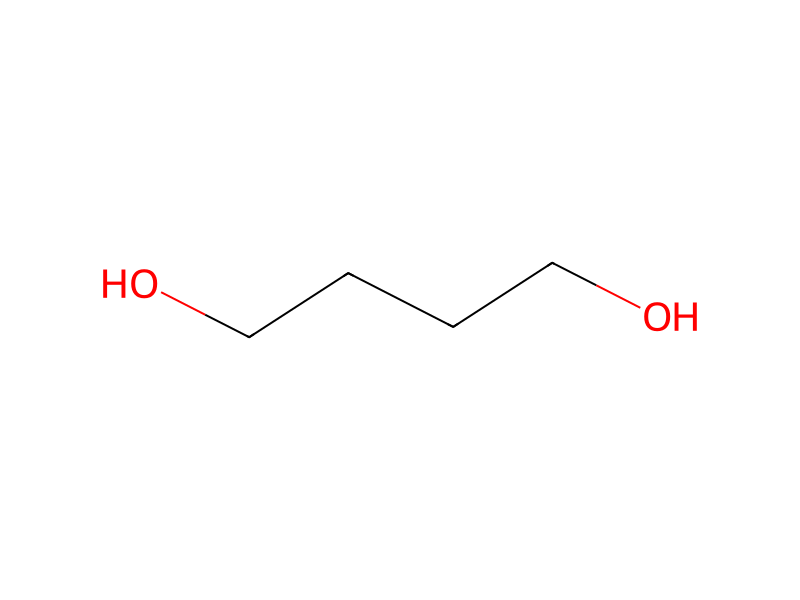
[N:1]1[C:8]([NH2:9])=[N:7][C:5]([NH2:6])=[N:4][C:2]=1[NH2:3].[H][H].[CH2:12](O)[CH2:13][CH2:14][CH2:15][OH:16]>[Pd]>[NH2:3][C:2]1[N:4]=[C:5]([NH2:6])[N:7]=[C:8]([NH:9][CH2:12][CH2:13][CH2:14][CH2:15][OH:16])[N:1]=1.[NH2:3][C:2]1[N:4]=[C:5]([NH:6][CH2:12][CH2:13][CH2:14][CH2:15][OH:16])[N:7]=[C:8]([NH:9][CH2:12][CH2:13][CH2:14][CH2:15][OH:16])[N:1]=1Participants
Reactant 3


Product 2


Reagents, catalysts & solvents 1

Procedure
In a stainless steel autoclave of an inner volume of 100 ml, 3.78 g (30 mmol) of melamine, 250 mg of 5% Pd—C catalyst (50% hydrated preparation), and 30 ml of 1,4-butanediol were charged. After the inside of the reaction system was sufficiently substituted with nitrogen gas, 10 kg/cm2 of hydrogen gas was introduced under pressure at normal temperature. Then, the temperature was elevated while stirring and after the temperature reached 240° C., the reaction was carried out at the same temperature for further 2 hours. After cooling, the reaction mixture was taken out and quantitative analysis of the reaction product was performed under the above analytical conditions. As a result, the reaction conversion rate of the starting material melamine was 26.4% and it was confirmed that there were produced 2,4-diamino-6-(4-hydroxybutylamino)-1,3,5-triazine in a yield of 6.2% and 2-amino-4,6-bis(4-hydroxybutylamino)-1,3,5-triazine in a yield of 0.4%, respectively, and an obvious decrease in activity as compared with the reactions using mixed catalyst systems was confirmed.
Workup
- additionwas introduced under pressure at normal temperature
- customreached 240° C.
- temperatureAfter cooling
Sources & evidence
- ORD record
- ord-99f4550188504e739fbc239c1a2fa8bd
- Source dataset
- uspto-grants-2001_10
- Patent number
- US06307046B1
Reaction notes
Loading…