Adipic Acid → Adipic Acid
Reaction equation

[C:1]([OH:10])(=[O:9])[CH2:2][CH2:3][CH2:4][CH2:5][C:6]([OH:8])=[O:7].C1(=O)CCCCC1.C1(O)CCCCC1>C1CCCCC1>[C:6]([OH:8])(=[O:7])[CH2:5][CH2:4][CH3:3].[C:6]([OH:8])(=[O:7])[CH2:5][CH2:4][CH2:3][CH3:2].[C:1]([OH:10])(=[O:9])[CH2:2][CH2:3][CH2:4][CH2:5][C:6]([OH:8])=[O:7]Participants
Reactant 3
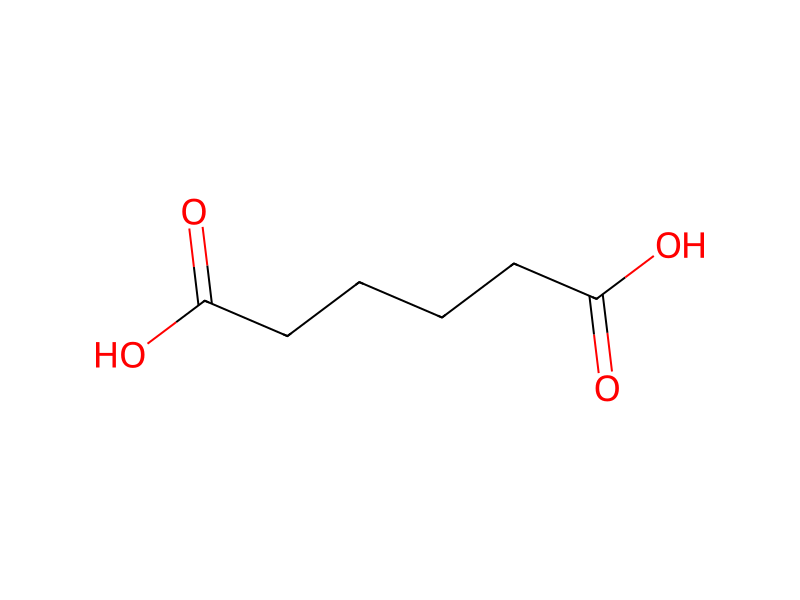
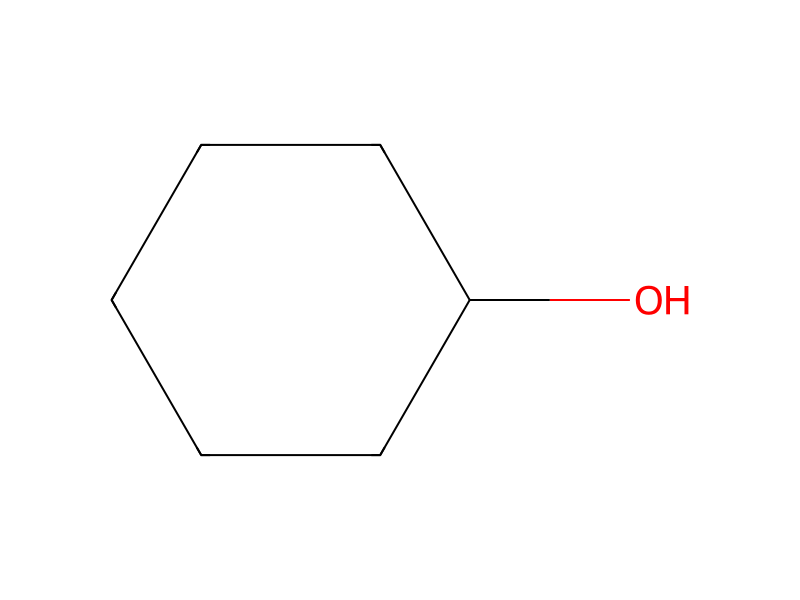

Product 3


Reagents, catalysts & solvents 1

Procedure
In reaction 19, cyclohexane was oxidized to a 1:7.1:6.0 mixture of adipic acid, cyclohexanone and cyclohexanol after 5 hours (turnovers: 21 (acid), 149 (ketone), 126 (alcohol); ˜6 % total conversion). The crude adipic acid product was collected by filtration after cooling the reaction mixture. Analyses of the isolated adipic acid were performed using elemental analysis, mass spectrometry, infrared spectroscopy, and 1H/13C NMR with comparisons to an authentic adipic acid sample. All analytical results showed that the isolated adipic acid (crude, washed with o-dichlorobenzene, but not recrystallized) was >95 % pure. NMR analysis showed that glutaric acid was also produced (<5 %) along with much lower amounts of shorter chain acids such as formic acid, butyric acid, valeric acid, etc. Only trace amounts of ketone and alcohol (and no adipic acid) were observed when the catalyst is omitted or replaced with 3 equivalents of dpphen alone.
Workup
- filtrationThe crude adipic acid product was collected by filtration
- temperatureafter cooling the reaction mixture
- customAll analytical results
- washwashed with o-dichlorobenzene
- customnot recrystallized)
Sources & evidence
- ORD record
- ord-ac5e1625f33f433e88ecedb5fdb86297
- Source dataset
- uspto-grants-2001_10
- Patent number
- US06307100B1
Reaction notes
Loading…