Water → HCID 58196761, compound
Reaction equation

Cl[C:2]1[CH:7]=[CH:6][N:5]2[N:8]=[CH:9][C:10]([CH:11]=[O:12])=[C:4]2[N:3]=1.[F:13][C:14]1[CH:19]=[CH:18][CH:17]=[CH:16][C:15]=1B(O)O.C(=O)([O-])[O-].[Cs+].[Cs+].O>CN(C=O)C.O.C1C=CC(P(C2C=CC=CC=2)[C-]2C=CC=C2)=CC=1.C1C=CC(P(C2C=CC=CC=2)[C-]2C=CC=C2)=CC=1.Cl[Pd]Cl.[Fe+2]>[F:13][C:14]1[CH:19]=[CH:18][CH:17]=[CH:16][C:15]=1[C:2]1[CH:7]=[CH:6][N:5]2[N:8]=[CH:9][C:10]([CH:11]=[O:12])=[C:4]2[N:3]=1Participants
7
Reactant 4




Product 1

Reagents, catalysts & solvents 2

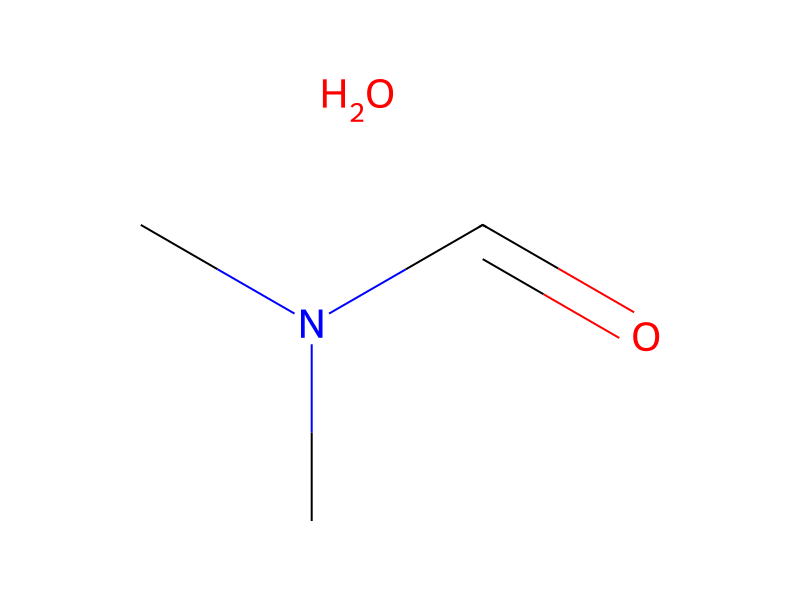
Conditions
- Temperature
- 100 °C
Procedure
To 5-chloropyrazolo[1,5-a]pyrimidine-3-carbaldehyde (150 mg, 0.83 mmol) in 4 mL DMF/water (0.05%) was added 2-fluorophenylboronic acid (174 mg, 1.245 mmol) and cesium carbonate (812 mg, 2.49 mmol). The mixture was degassed under nitrogen during 10 minutes. PdCl2(dppf)2 (30.3 mg, 0.041 mmol) was then added. The mixture was heated in the microwave at 100° C. for 10 minutes. Water was added, the precipitate was isolated by filtration and air dried to give 5-(2-fluorophenyl)pyrazolo[1,5-a]pyrimidine-3-carbaldehyde. LCMS (M+1)=241
Workup
- customThe mixture was degassed under nitrogen during 10 minutes
- customthe precipitate was isolated by filtration and air
- customdried
Sources & evidence
- ORD record
- ord-4f92848c91104eaaa734f04c4ff8ced0
- Source dataset
- uspto-grants-2013_02
- Patent number
- US08367681B2
Reaction notes
Loading…