Water → 2-Pentylidenecyclopentanone
Reaction equation

O.[OH-].[Na+].C(=O)CCCC.C1(=O)CCCC1.O[CH:17]([CH:22]1[CH2:26][CH2:25][CH2:24][C:23]1=[O:27])[CH2:18][CH2:19][CH2:20][CH3:21]>>[CH:17](=[C:22]1[CH2:26][CH2:25][CH2:24][C:23]1=[O:27])[CH2:18][CH2:19][CH2:20][CH3:21]Participants


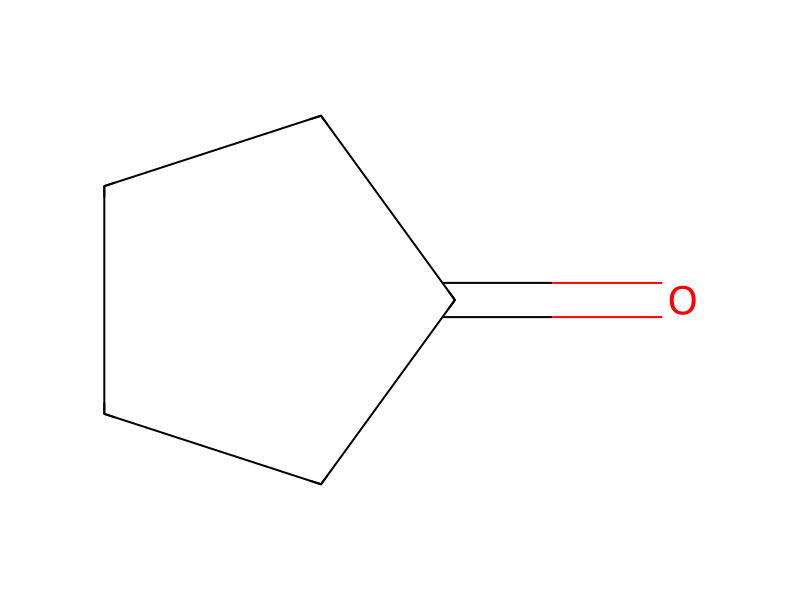



Conditions
- Temperature
- 15 °C
Procedure
A 100 mL four-necked flask was charged with 16.6 g (0.92 mol) of water and 0.16 g (0.004 mol) of sodium hydroxide. After cooling the contents of the flask to 15° C. under stirring, a mixed solution containing 61.3 g (0.71 mol) of valeraldehyde (acid value: 1.5 mg-KOH/g) and 237.8 g (2.83 mol) of cyclopentanone, and 36.0 g of a sodium hydroxide aqueous solution (concentration of sodium hydroxide: 0.36% by mass) were added dropwise into the flask over 6 h. While dropping, the resulting reaction mixture was withdrawn from the flask at a rate 1.4 times the dropping rate, and introduced into a dropping funnel (separator) to separate the reaction mixture into an organic layer and a water layer. The water layer separated as a lower layer of the reaction mixture was returned to the flask. Whereas, the organic layer separated as an upper layer of the reaction mixture was collected every one hour, and each part of the organic layer collected every one hour was subjected to gas chromatography. After completion of the dropping, the reaction mixture in the flask was separated into the respective layers, and each of the thus separated organic and water layers was analyzed by gas chromatography. As a result, it was confirmed that the organic layer contained 3.06 g (0.036 mol) of valeraldehyde, 106.5 g (0.63 mol) of 2-(1-hydroxy-n-pentyl)cyclopentanone and 2.13 g (0.014 mol) of pentylidene cyclopentanone (conversion rate of valeraldehyde: 95.0%; yield: 89.9%).
Workup
- additionwere added dropwise into the flask over 6 h
- customthe resulting reaction mixture
- customwas withdrawn from the flask at a rate 1.4 times the dropping rate
- additionintroduced into a dropping funnel (separator)
- customto separate the reaction mixture into an organic layer
- customThe water layer separated as a lower layer of the reaction mixture
- customWhereas, the organic layer separated as an upper layer of the reaction mixture
- customwas collected every one hour
- customeach part of the organic layer collected every one hour
- customAfter completion of the dropping, the reaction mixture in the flask was separated into the respective layers
Sources & evidence
- ORD record
- ord-d39f630c1d844104864792ab90226324
- Source dataset
- uspto-grants-2013_02
- Patent number
- US08367874B2
Reaction notes
Loading…