Methanol → Phenol, 2-[[(2-hydroxyphenyl)imino]methyl]-
Reaction equation

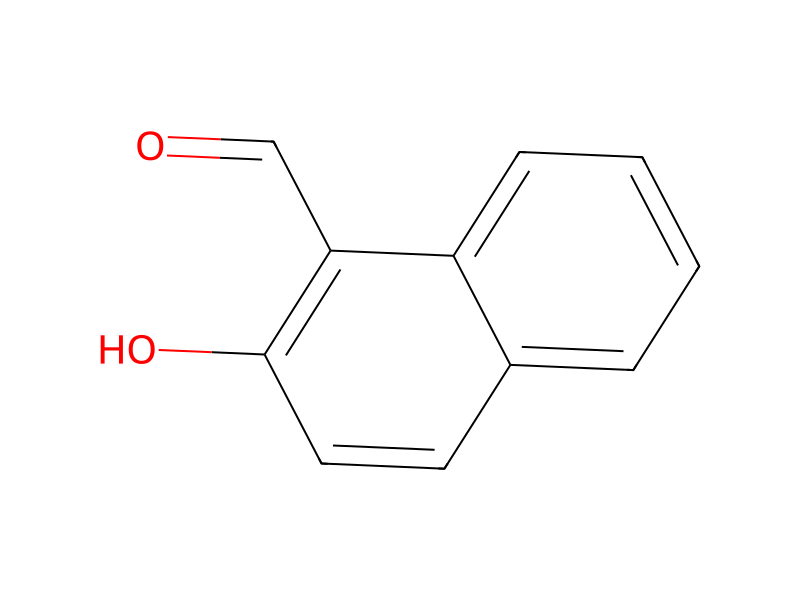
CO.[NH2:3][C:4]1[CH:9]=[CH:8][CH:7]=[CH:6][C:5]=1[OH:10].[OH:11][C:12]1[CH:21]=[CH:20][C:19]2[C:14](=CC=CC=2)[C:13]=1[CH:22]=O>C(O)C.ClCCl>[CH:22](=[N:3][C:4]1[CH:9]=[CH:8][CH:7]=[CH:6][C:5]=1[OH:10])[C:13]1[C:12](=[CH:21][CH:20]=[CH:19][CH:14]=1)[OH:11]Participants
6
Reactant 3


Product 1

Reagents, catalysts & solvents 2


Procedure
The preparations of compounds used in this invention are shown in detail below. In general [nBu4N][OsVI(N)Cl4] is reacted with the ligand in a suitable organic solvent, such as methanol, ethanol or dichloromethane. The Schiff base ligands 5-X—H2salpa (salpa=N-salicylidene-2-aminophenol dianions) are synthesized by condensation of the appropriate 2-hydroxybenzyaldehyde with the 2-aminophenol in refluxing ethanol. The Schiff base ligand nalph is synthesized by condensation of the 2-hydroxy-1-naphthaldehyde with the 2-aminophenol in refluxing ethanol. [NnBu4][OsVI(N)Cl4] were prepared by a literature procedure (Griffith, W. P. and Pawson, D. J. J. Chem. Soc., Dalton Trans. 1973, 1315.).
Sources & evidence
- ORD record
- ord-b9b91f71ceec4cf09f066b0829d25792
- Source dataset
- uspto-grants-2013_02
- Patent number
- US08383673B2
Reaction notes
Loading…