Bromide ion → tert-Butyl piperazine-1-carboxylate
Reaction equation

BrC1C=CC=CC=1OC1C=CC=CC=1Br.C([C:20]([N:22]1[CH2:27][CH2:26][NH:25][CH2:24][CH2:23]1)=[O:21])(C)(C)C.[CH3:28][C:29]([CH3:32])([O-:31])[CH3:30].[Na+].[Br-]>C1(C)C=CC=CC=1.C1C=CC(P(C2C(C3C(P(C4C=CC=CC=4)C4C=CC=CC=4)=CC=C4C=3C=CC=C4)=C3C(C=CC=C3)=CC=2)C2C=CC=CC=2)=CC=1>[C:20]([N:22]1[CH2:27][CH2:26][NH:25][CH2:24][CH2:23]1)([O:31][C:29]([CH3:32])([CH3:30])[CH3:28])=[O:21]Participants





Procedure
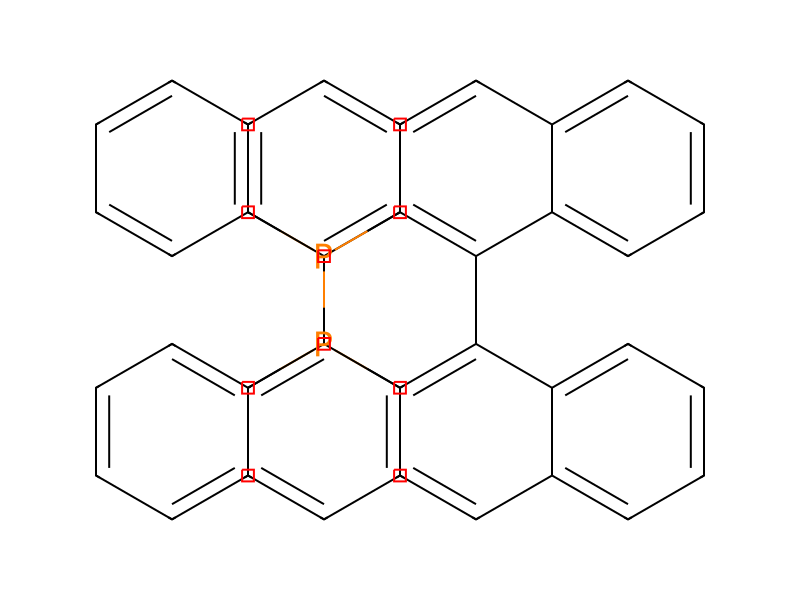
Part B: To a solution of the bromophenyl ether of Part A (10.0 g, 41.1 mmol) in toluene (80 mL) was added 1-tert-butylcarbonylpiperazine (Lancaster, 9.2 g, 49.4 mmol) and sodium tert-butoxide (Fluka, 5.5 g, 57.5 mmol). The reaction stirred at ambient temperature for twenty minutes. BINAP (Aldrich, 0.8 g, 1.2 mmol) and tris(dibenzylideacetone)dipalladium (0) (Aldrich, 0.4 g, 0.4 mmol) were then added and the reaction was stirred at 80° C. until the bromide was exhausted. Work up comprised cooling the mixture to ambient temperature, filtering through a Celite® pad, and concentrating the filtrate. The resulting residue was purified on silica gel (ethyl acetate/hexanes) to afford the BOC-piperazine as a black oil (6.4 g, 44% yield). 1H NMR showed the desired compound.
Workup
- temperatureWork up comprised cooling the mixture to ambient temperature
- filtrationfiltering through a Celite® pad
- concentrationconcentrating the filtrate
- customThe resulting residue was purified on silica gel (ethyl acetate/hexanes)
Sources & evidence
- ORD record
- ord-4bb5208ee51a4007a19a69b29bd184e9
- Source dataset
- uspto-grants-2004_10
- Patent number
- US06800646B1
Reaction notes
Loading…