Acetic Anhydride → Acetaldehyde
Reaction equation

[C:1]([O:4][C:5](=O)[CH3:6])(=[O:3])[CH3:2]>C(O)(=O)C>[C:1]([O:4][CH:5]=[CH2:6])(=[O:3])[CH3:2].[CH:1](=[O:3])[CH3:2]Participants
Reactant 1

Product 2
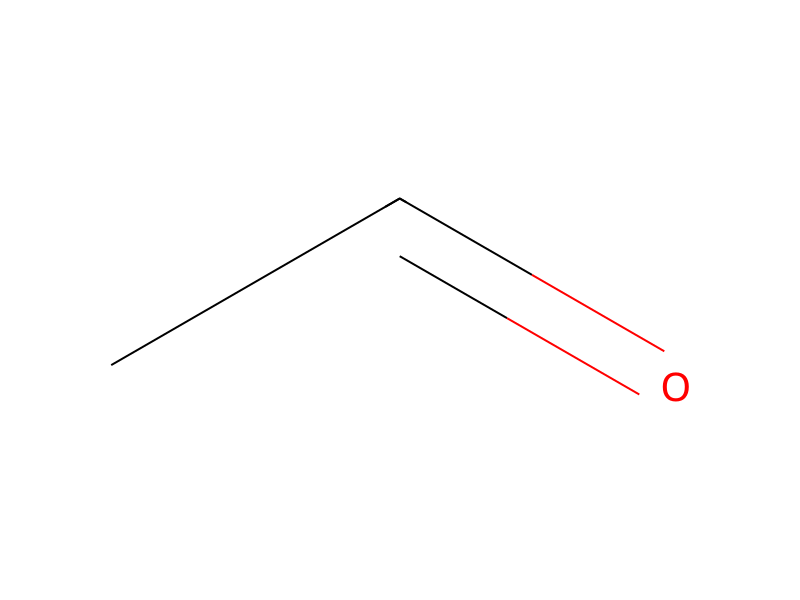

Reagents, catalysts & solvents 1

Procedure
Acetic anhydride (250 g) containing 0.1 weight percent benzene sulfonic acid was charged initially to the base of the apparatus described above. The acetaldehyde feed was started and gradually increased to 12 ml per hour and allowed to reach steady state over 14.2 hours. Upon reaching steady state, feed rates were fixed at 9 mL per hour for acetic anhydride containing 1 weight percent benzenesulfonic acid and 12 mL per hour for acetaldehyde for the remainder of the experiment. This provides an acetaldehyde:acetic anhydride mole ratio of 2.3:1. An additional 18.4 hours of operation at these conditions produced an average of 8.9 g per hour vinyl acetate, 3.7 g per hour acetaldehyde, and 1.18 g per hour acetic acid in the overhead takeoff, which was operated to remove the distillation fraction boiling below or at 65° C.
Sources & evidence
- ORD record
- ord-356a2cf2b7c14c6aafc0cdd8c20cb2e4
- Source dataset
- uspto-grants-1998_10
- Patent number
- US05821384
Reaction notes
Loading…