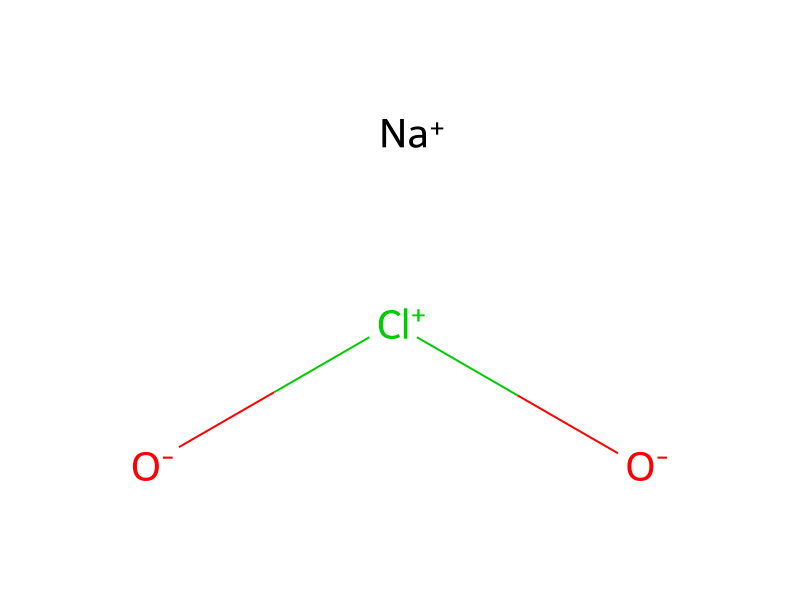
Sodium Chlorite → 4-(7H-pyrrolo[2,3-d]pyrimidin-4-yl)furan-2-carboxylic acid
Reaction equation

[N:1]1[C:6]2[NH:7][CH:8]=[CH:9][C:5]=2[C:4]([C:10]2[CH:11]=[C:12]([CH:15]=[O:16])[O:13][CH:14]=2)=[N:3][CH:2]=1.P([O-])(O)(O)=[O:18].[Na+].Cl([O-])=O.[Na+]>CS(C)=O.O>[N:1]1[C:6]2[NH:7][CH:8]=[CH:9][C:5]=2[C:4]([C:10]2[CH:11]=[C:12]([C:15]([OH:18])=[O:16])[O:13][CH:14]=2)=[N:3][CH:2]=1Participants
Reactant 3


Product 1

Reagents, catalysts & solvents 2


Procedure
600 mg [2.82 mMols] of 4-(7H-pyrrolo[2,3-d]pyrimidin-4-yl)furan-2-carbaldehyde was dissolved in 5.0 mL of DMSO/2.0 mL of water and stirred with 210 mg [1.75 mMols] of sodium dihydrogen phosphate, reducing the temperature as cold as possible so as not to effect crystallization. 532 mg sodium chlorite [5.88 mMols] in 4.0 mL of water was slowly added dropwise to this stirring solution. Solution was allowed to warm to ambient temperature and diluted with water to effect precipitation. The fine flocculent material was centrifuged down and washed with water and re-centrifuged. The oily pellet was transferred to a RB with acetonitrile and the solvents were removed under reduced pressure. The residue was stirred with a mixture of MTBE/acetonitrile (4:1) overnight and the powder isolated in the morning via suction filtration, washed with the same mixture and air dried. The material, (yield 64.6%) a beige powder, was utilized without further purification. LC/MS m+1 230/m−1 228.
Workup
- customcrystallization
- customprecipitation
- washwashed with water
- customthe solvents were removed under reduced pressure
- customthe powder isolated in the morning via suction filtration
- washwashed with the same mixture and air
- customdried
Sources & evidence
- ORD record
- ord-efe8b6c7aa3644a09102554290a76edc
- Source dataset
- uspto-grants-2014_06
- Patent number
- US08741912B2
Reaction notes
Loading…