Acetic Acid → HCID 86676402, compound
Reaction equation

[CH:1]([C@:3]12[CH2:41][CH2:40][C@@H:39]([C:42]([CH3:44])=[CH2:43])[C@@H:4]1[C@@H:5]1[C@@:18]([CH3:21])([CH2:19][CH2:20]2)[C@@:17]2([CH3:22])[C@@H:8]([C@:9]3([CH3:38])[C@@H:14]([CH2:15][CH2:16]2)[C:13]([CH3:24])([CH3:23])[C:12]([C:25]2[CH:37]=[CH:36][C:28]([C:29]([O:31][C:32]([CH3:35])([CH3:34])[CH3:33])=[O:30])=[CH:27][CH:26]=2)=[CH:11][CH2:10]3)[CH2:7][CH2:6]1)=O.C(O)(=O)C.[NH2:49][CH2:50][CH:51]1[CH2:55][CH2:54][CH2:53][N:52]1[CH2:56][CH3:57].C(O[BH-](OC(=O)C)OC(=O)C)(=O)C.[Na+]>ClCCCl.C([O-])(O)=O.[Na+]>[CH2:56]([N:52]1[CH2:53][CH2:54][CH2:55][CH:51]1[CH2:50][NH:49][CH2:1][C@:3]12[CH2:41][CH2:40][C@@H:39]([C:42]([CH3:44])=[CH2:43])[C@@H:4]1[C@@H:5]1[C@@:18]([CH3:21])([CH2:19][CH2:20]2)[C@@:17]2([CH3:22])[C@@H:8]([C@:9]3([CH3:38])[C@@H:14]([CH2:15][CH2:16]2)[C:13]([CH3:23])([CH3:24])[C:12]([C:25]2[CH:26]=[CH:27][C:28]([C:29]([O:31][C:32]([CH3:33])([CH3:34])[CH3:35])=[O:30])=[CH:36][CH:37]=2)=[CH:11][CH2:10]3)[CH2:7][CH2:6]1)[CH3:57]Participants
Reactant 4
 HCID 176Acetic Acid2×
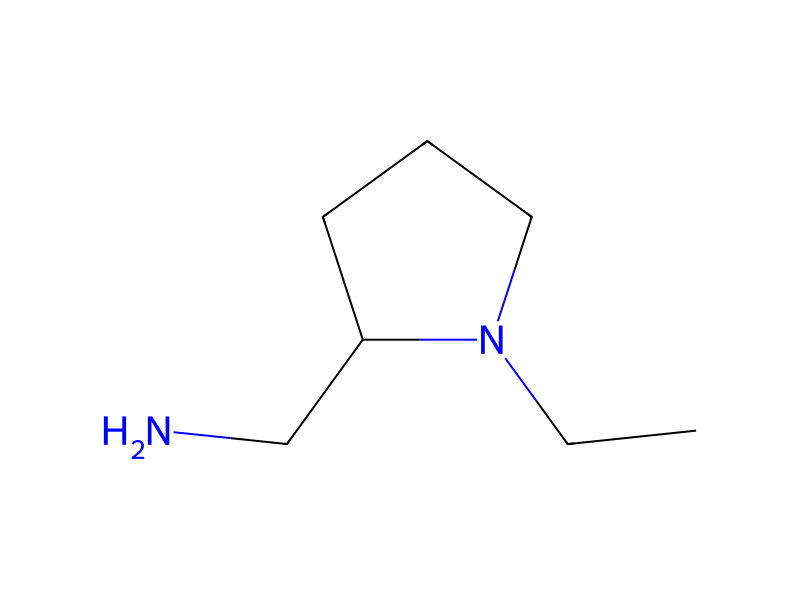 HCID 1172952-Aminomethyl-1-ethylpyrrolidine2×
 HCID 5049666Sodium triacetoxyborohydride3×
 HCID 86676397tert-butyl 4-((1R,3aS,5aR,5bR,7aR,11aS,11bR,13aR,13bR)-3a-formyl-5a,5b,8,8,11a-pentamethyl-1-(prop-1-en-2-yl)-2,3,3a,4,5,5a,5b,6,7,7a,8,11,11a,11b,12,13,13a,13b-octadecahydro-1H-cyclopenta[a]chrysen-9-yl)benzoate
Product 1

Reagents, catalysts & solvents 2


Procedure
To a solution of tert-butyl 4-((1R,3aS,5aR,5bR,7aR,11aS,11bR,13aR,13bR)-3a-formyl-5a,5b,8,8,11a-pentamethyl-1-(prop-1-en-2-yl)-2,3,3a,4,5,5a,5b,6,7,7a,8,11,11a,11b,12,13,13a,13b-octadecahydro-1H-cyclopenta[a]chrysen-9-yl)benzoate (0.1 g, 0.167 mmol) in DCE (2 ml) was added acetic acid (1M in DCM) (0.167 ml, 0.167 mmol) and 2-(aminomethyl)-1-ethylpyrrolidine (0.029 ml, 0.200 mmol). The mixture was stirred for 15 minutes at rt and sodium triacetoxyborohydride (0.071 g, 0.334 mmol) was added. The mixture was stirred at rt for 1.5 h then an additional 0.1 g of sodium triacetoxyborohydride was added and the mixture was stirred at rt overnight. After 24 h of stirring, some starting material still remained by TLC. To the mixture was added acetic acid (1M in DCM) (0.167 ml, 0.167 mmol), 2-(aminomethyl)-1-ethylpyrrolidine (0.029 ml, 0.200 mmol), and sodium triacetoxyborohydride (0.071 g, 0.334 mmol). The mixture was stirred at rt for an additional 19 h then was diluted with 7 ml of sat. NaHCO3. The mixture was extracted with dichloromethane (3×7 ml) and the combined organic layers were dried with Na2SO4. The drying agent was removed by filtration and the filtrate was concentrated under reduced pressure. The mixture was purified by flash chromatography using a 0-10% MeOH in dichloromethane gradient. Two products were isolated as white foams. LC/MS indicated the same mass for both, with different retention times. 1H NMR confirmed that two diastereomers were isolated. 44 mg of diastereomer 1 (less polar spot by TLC) was isolated while 55 mg of diastereomer 2 (more polar spot) was isolated. Diastereomer 1: LCMS: m/e 711.4 (M+H)+, 3.34 min (method 6). Diastereomer 2: LCMS: m/e 711.6 (M+H)+, 3.27 min (method 6).
Workup
- stirringThe mixture was stirred at rt for 1.5 h
- stirringthe mixture was stirred at rt overnight
- stirringAfter 24 h of stirring
- stirringThe mixture was stirred at rt for an additional 19 h
- extractionThe mixture was extracted with dichloromethane (3×7 ml)
- dry with materialthe combined organic layers were dried with Na2SO4
- customThe drying agent was removed by filtration
- concentrationthe filtrate was concentrated under reduced pressure
- customThe mixture was purified by flash chromatography
- customTwo products were isolated as white foams
- customwere isolated
- custom44 mg of diastereomer 1 (less polar spot by TLC) was isolated while 55 mg of diastereomer 2 (more polar spot)
- customwas isolated
- customm/e 711.4 (M+H)+, 3.34 min (method 6)
- customm/e 711.6 (M+H)+, 3.27 min (method 6)
Sources & evidence
- ORD record
- ord-f7543c47752840bfa2fec369544ecb56
- Source dataset
- uspto-grants-2014_06
- Patent number
- US08748415B2
Reaction notes
Loading…