Isobutyraldehyde → HCID 58118986, compound
Reaction equation

[Br:1][C:2]1[CH:3]=[N:4][C:5]([NH:8][NH2:9])=[N:6][CH:7]=1.[CH:10](=O)[CH:11]([CH3:13])[CH3:12].C(O)(=O)C.C(O)(=O)C.IC1C=CC=CC=1>ClCCl.C(O)(=O)C>[Br:1][C:2]1[CH:3]=[N:4][C:5]2[N:6]([C:10]([CH:11]([CH3:13])[CH3:12])=[N:9][N:8]=2)[CH:7]=1Participants
6
Reactant 3
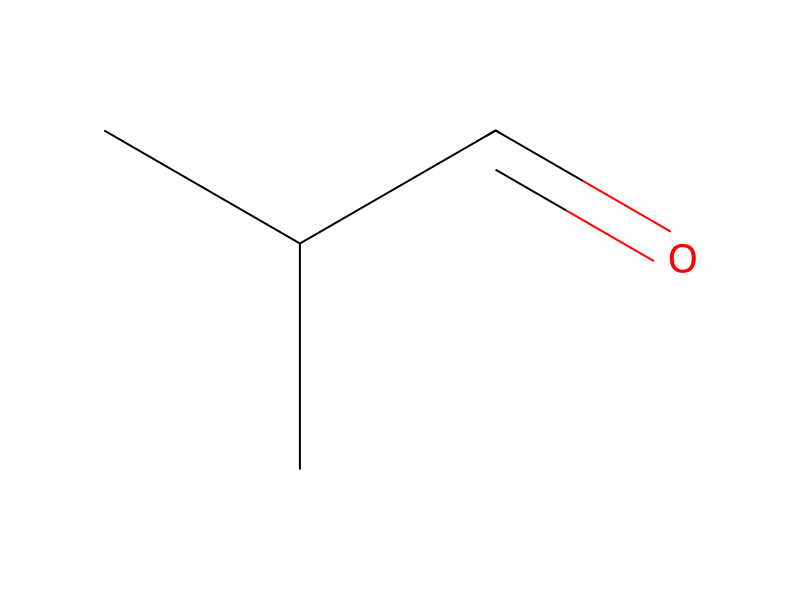


Product 1

Reagents, catalysts & solvents 2


Procedure
To a round bottom flask was added 5-bromo-2-hydrazinopyrimidine (2.65 mmole) in dichloromethane (40 mL). To this solution was added isobutyraldehyde (2.65 mmole) followed by 2 drops of acetic acid. The reaction mixture was stirred at room temperature for 2 hours after which was added iodobenzene diacetate (2.77 mmole). The resulting reaction mixture was stirred at RT for another 2 hours. The mixture was evaporated in vacuo and purified by preparative TLC eluting with 5% methanol and dichloromethane mixture to give 6-bromo-3-isopropyl-[1,2,4]triazolo[4,3-a]pyrimidine.
Workup
- customThe resulting reaction mixture
- stirringwas stirred at RT for another 2 hours
- customThe mixture was evaporated in vacuo
- custompurified by preparative TLC
- washeluting with 5% methanol and dichloromethane mixture
Sources & evidence
- ORD record
- ord-0c1cc4dd7b44467794d0dcbb536a2084
- Source dataset
- uspto-grants-2014_06
- Patent number
- US08754103B2
Reaction notes
Loading…